
Glasgow Cathedral: the remarkable 800-year old church that refused to fall
Please share
In 16th century Scotland, Reformation mobs were sweeping through the country targeting Catholic churches, tearing down altars, stripping chapels, and gutting medieval cathedrals that had stood for centuries.
And the most ancient of them all, Glasgow Cathedral, was a prime target on their hit list.
How did it survive this religious and societal upheaval? And what was lost and what was gained?
If you’d like to know more about the Glasgow Cathedral and other notable Glasgow churches, you’re in the right place. Here you’ll find the fascinating stories of history and medieval architecture behind many of the cathedral’s features and artifacts as well as advice about what you need to plan your visit.
All photos by Derek Cadzow and Jacqueline Weatherly-Cadzow, except where noted.
A place of worship for 1,500 years
The site on which Glasgow Cathedral was built has been considered holy ground for a long time. As early as 397 AD, Saint Ninian blessed it for Christian burial.
The first church was small and wooden and it was founded by St. Mungo (also known as St. Kentigern) around AD 550.
There have been three others since then.
The second one was also wood. The third was stone, dedicated in 1136 by King David of Scotland with his full court present. It took 150 years to complete and it stood for less than a century before it was destroyed by fire.
The fourth structure is the current one and it was begun by Bishop William de Bondington in 1233, making it almost 800 years old.
But it’s not just its age that makes Glasgow Cathedral remarkable, it’s also that it survived intact for that long.
During the Reformation of the 1560s, mobs intent on converting the country to the Protestant faith from Catholicism tore down altars, stripped chapels, smashed beautiful stained glass windows, and inflicted much damage on the old buildings.
Glasgow Cathedral suffered some of this — the altars were pulled from the fourteen pillars of the nave, leaving holes in the stone that couldn’t be matched for color three centuries later because the original stone was no longer available.
But the building itself survived almost intact mostly due to members of the Trades House of Glasgow. These were the craftsmen and tradespeople who had built it and they were not going to watch it burn. They stood their ground between the cathedral and the mobs and saved the cathedral from the total ruin that had befallen many other churches and cathedrals in the country.
There was also a practical reason to protect it: the towers stored legal documents: land ownership records, wills, marriage licenses, and contracts. Destroying them would have caused chaos for everyone regardless of their religion.
Our arrival at Glasgow Cathedral
We visited the cathedral last spring on our way to a tour of the Scottish Highlands. We’d arrived by train from Edinburgh and spent an all-too-short half-day in Glasgow before continuing on to our week-long highland adventures. After a quick motorized tour around the city we, thankfully, were able to get off the bus for an hour and we were free to explore the cathedral on foot.
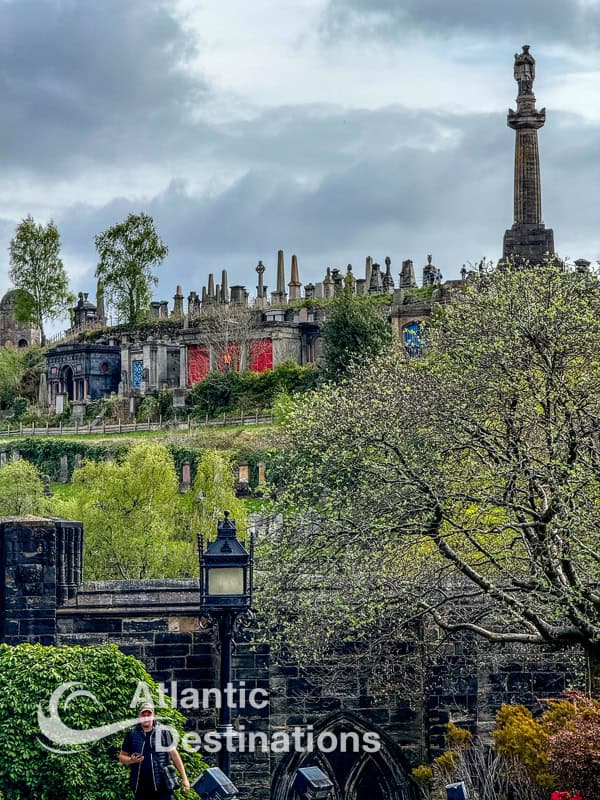
The cathedral sits at the top of Castle Street with the Glasgow Necropolis visible on the hill behind it. The Necropolis is a Victorian cemetery that provides the most dramatic backdrop of any cathedral in Scotland and is actually the best spot to view the exterior of the building. Together they create a skyline that stops you mid-stride.

But today, my first sight of the building was a slight disappointment: the spire was covered in scaffolding.
It’s understandable; it’s part of the unglamorous business of keeping an 800-year-old building standing. But it was still a mild irritation, possibly because I had not seen it in a while and because of the personal connection I have to this place.
My parents were married here. I was christened here. My grandfather, George Cadzow, walked visitors through these same aisles in the 1960s and ’70s, stopping at the same pillars, and telling the same stories to visitors. (I still have his typewritten tour script.)
At least three generations of my family have had reason to stand inside these walls.
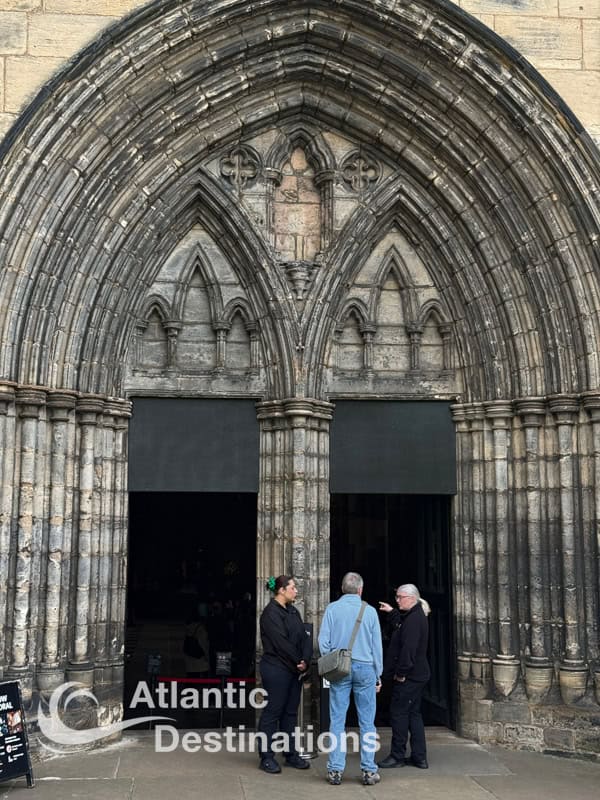
However, when I stepped back and looked at the full facade, the scaffolding faded into insignificance. The medieval stonework is something to behold. And the building is larger than you expect. At 285 feet long and 105 feet high at the nave roof, it is one of the highest naves in Britain.
What’s a nave? See our short glossary for first-time cathedral visitors below.
I remember that, as a child, it seemed enormous beyond belief. Returning as an adult, I had expected it to feel smaller — most childhood places do. And for a moment, standing in the nave, it did seem more contained than I remembered.
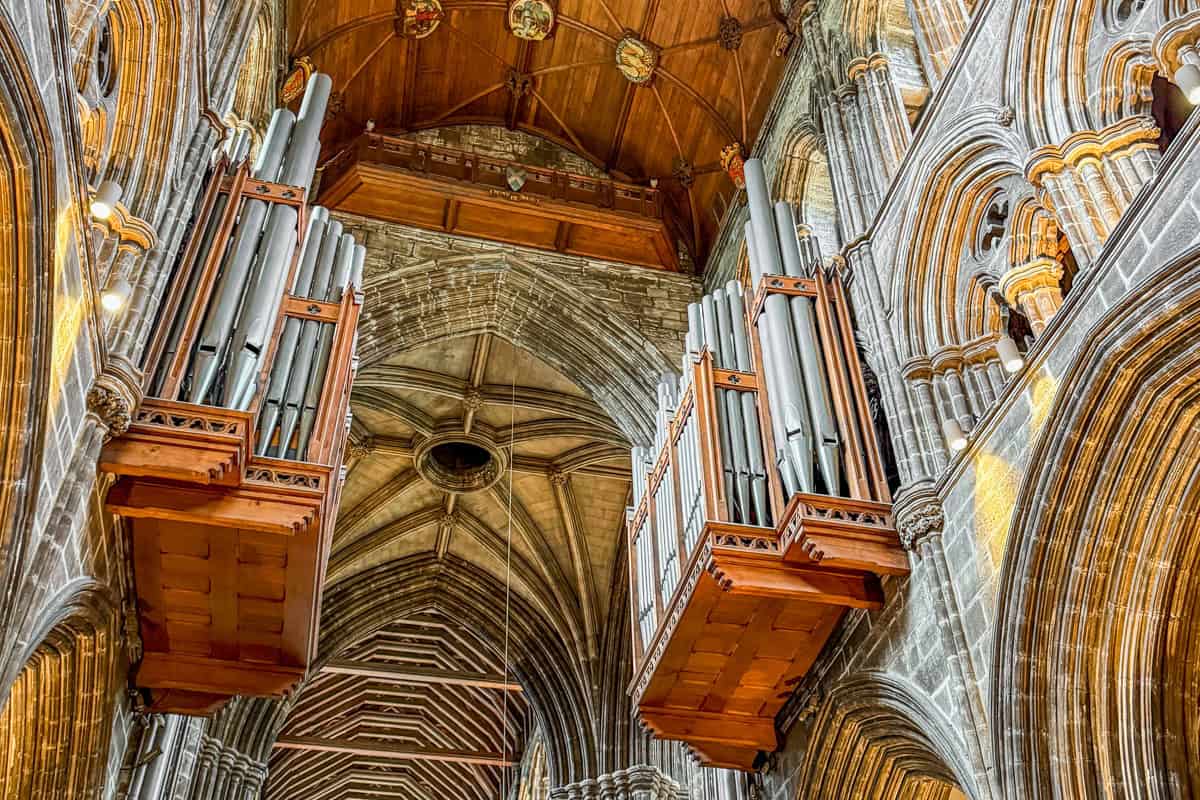
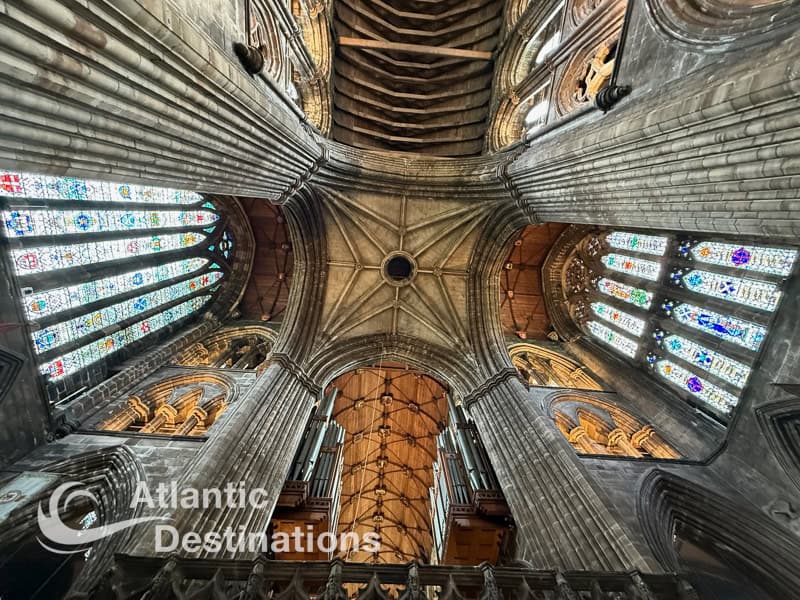
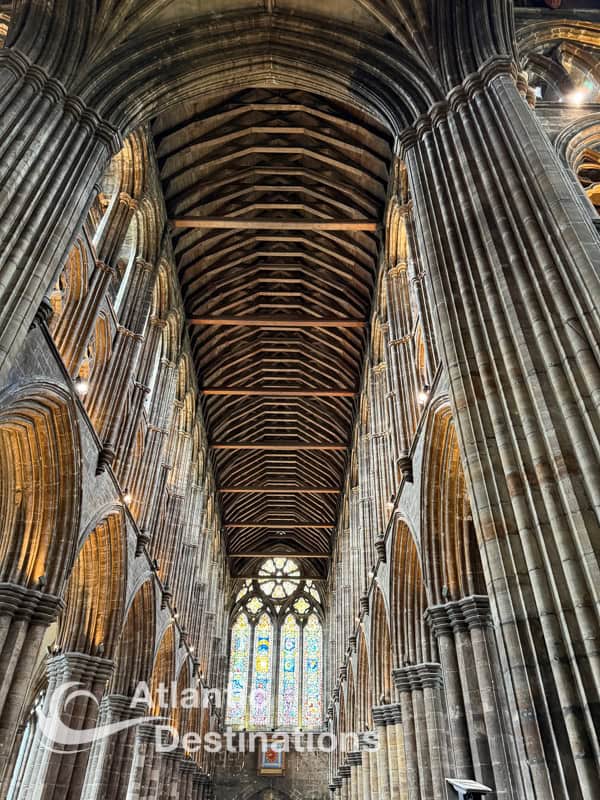
But then I looked up. The grandeur of the columns and the construction of the oak roof reinforced just how massive this ancient building truly is.

Walking through the nave
You enter the cathedral and the nave from the west, the long central hall where the congregation has gathered for services since the 14th century.

In pre-Reformation times, fourteen pillars lined this space, each with its own altar dedicated to a different saint: St John the Baptist, St Nicholas, St Kentigern, St Cuthbert, St Andrew, and others.
But the altars are all gone now, pulled down by the Reformation mobs. All that remains are the pillars, still marked by the different-colored patches where the stone could not be matched because, after all that time since the cathedral was constructed, the original stone was no longer available.

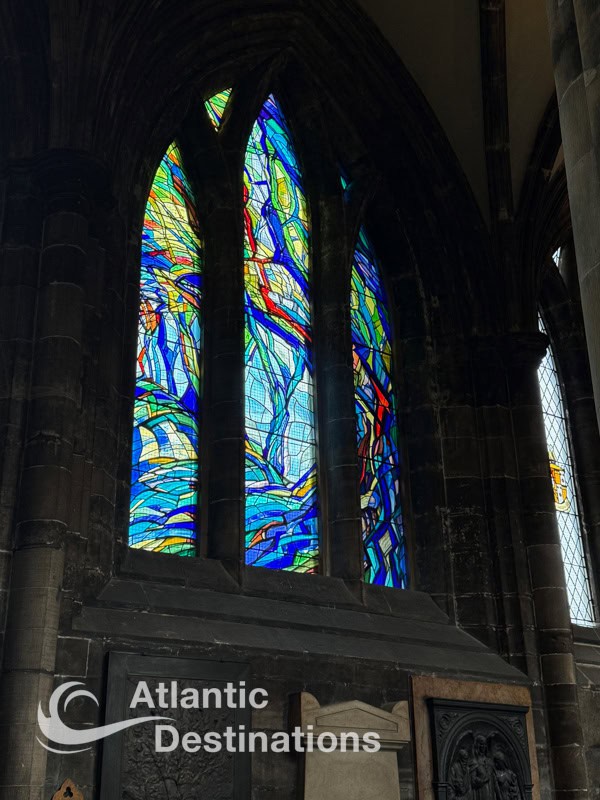
The large stained glass windows at the west end were gifted by the Glasgow Corporation in 1958. The two centre panels depict Adam and Eve. The outer panels depict Darkness and Light, Alpha and Omega. On his tour, my grandfather would tell visitors that, together, they represent the Creation.
Beneath the windows hangs a copy of a 17th century Dutch clock — also a gift to the church in 1958, It strikes at the quarter, half, and three-quarter hours.
The cathedral bell
At the west end, in the north-west corner, stands the cathedral bell. It was cast in Holland in 1594 at the commission of Marcus Knox, a Glasgow merchant, and hung in the tower to call people to worship.
From his tour script, my grandfather would read its inscription aloud to visitors, written as if the bell itself was speaking: “In the year of Grace, 1594, Marcus Knox, a merchant in Glasgow, zealous for the interest of the reformed religion, caused me to be fabricated in Holland, for the use of his fellow-citizens of Glasgow, and placed me with solemnity in the tower of their Cathedral.”
The bell rang for 195 years before being broken by, as the inscription records with dignified understatement, “the hands of inconsiderate and unskilful men.” It was recast in London in 1790 and returned to its sacred purpose.
The ladybug carving
If you look carefully at one of the two Royal Naval Volunteer Reserve chairs in the nave you might see a carved ladybug (called a ladybird in Scotland). It’s a memento of the apparent good luck brought to a WW2 British cruiser escorting merchant ships to Russia by one of those small creatures.
The ladybug landed on the captain’s map as he was plotting their course. As one of his officers moved to kill it, the captain stopped him saying that alive, it will bring us good luck. Some hours later the cruiser was torpedoed, but every man on board was saved. It seemed the captain knew what he was talking about.
The last surviving quire screen in Scotland
Halfway along the cathedral, between the nave and the quire, stands the quire screen, also called the Pulpitum. It is the only one left in Scotland.
During the Reformation, quire screens were among the first things the mobs destroyed. The reason was social as much as religious: in pre-Reformation times, the screens divided the cathedral by class. The nobility worshipped in the quire on the east side. The working people worshipped in the nave on the west side. The reformers saw this as snobbery made in stone, and they were determined to tear quire screens down wherever they found them.
Glasgow Cathedral’s was partly destroyed but survived and was rebuilt.
On its face stands eleven figures representing the apostles with Judas being the one left out, for obvious reasons. Around the perimeter are seven carvings representing the seven deadly sins: anger, avarice, covetousness, greed, lust, pride, and sloth.

My grandfather had a story about the screen that I suspect he enjoyed telling rather too much.
At weddings, the bride enters through the west door, walks the full length of the 285-foot nave, ascends the quire screen steps, and continues into the quire for the ceremony. “By the time she gets halfway,” he told his tour groups, “she has the time to change her mind.”
My mother walked that aisle. My father waited for her at the far end.
The lower church and St Mungo’s crypt
I’d never gone down to the lower part of the church before and walking down the worn stone steps is like descending into a different world.
Old, discolored, and worn handcrafted stone surround you on all sides. Just the look and the feel of the place underscores its age.
It’s dark: it’s built into the hillside below the main cathedral and the windows are smaller and let in less light. If the upper church looks historic, the lower church is definitely ancient.


At the bottom of the stairs you first come across two stone coffins. They are cracked and worn in the way that only a thousand years of existence can explain.
It was in the lower church that the University of Glasgow held its first classes in 1454, before the university had a building of its own.
The lower church is also where St Mungo, a missionary and the founder of Glasgow, was laid to rest. He died, depending on who you listen to, sometime between 603 and 614 AD, and was buried on this site long before the cathedral was built.
His shrine is the centerpiece of the lower church and it’s well lit and hard to miss. His remains are said to still rest in the crypt, which was a great centre of Christian pilgrimage until the Reformation. Covering the crypt is a colorful carpet that was used at the wedding of Princess Mary and the coronation of King Edward VII at Westminster Abbey.
It would be here that my grandfather ended his tour, walking his visitors through the Chapter House, the four chapels dedicated to St Nicholas, St Peter, St Paul, and St John the Evangelist, and the Blacader Aisle — the last part of the cathedral to be built, completed between 1483 and 1508, and notable for what my grandfather called “one of the finest collections of carved bosses in Scotland.”

A family connection I’m still uncovering
When we arrived at the cathedral last year, the first thing I did was ask about where baptisms took place. I wanted to see where I’d been as a baby so many years before.
A volunteer pointed me toward two possibilities — a baptismal font near the entrance and another near the high altar. I contacted my godmother afterwards, my aunt, to ask if she remembered where my christening had taken place. She was apologetic. After so many years, she simply didn’t remember.
Click the thumbnails to see larger versions of the images

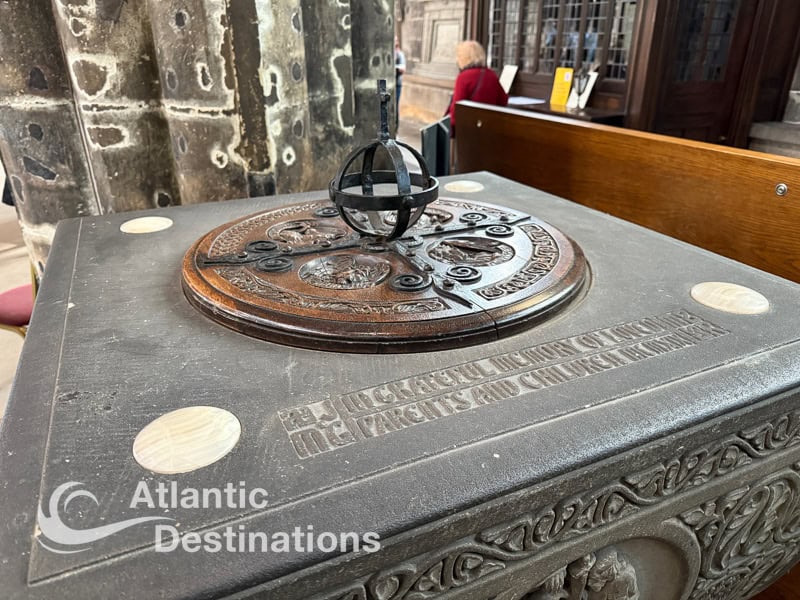
The baptismal font – was it here that the deed was done?
But there was another long-forgotten memory waiting for me inside the nave.
Standing in the main chapel, I was suddenly five years old again, sitting between my parents in these same pews, restless and bored while the sermon dragged on. I remembered the rush of relief when the children were called to Sunday school, and then the sinking realization that I’d forgotten to get collection money before leaving my parents.
I ran back. My parents fumbled for coins. By the time it was sorted out, the other children were gone. I had to stay with the adults — trapped in the slow crawl of a sermon with no escape. Ugh.
Even after that length of time, the memory returned suddenly and vividly and connected me again with my parents, both now long gone.
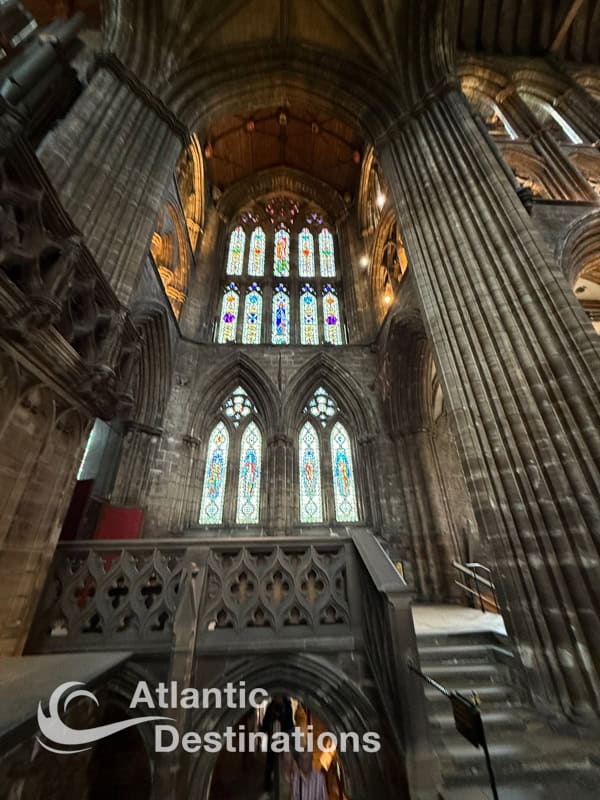
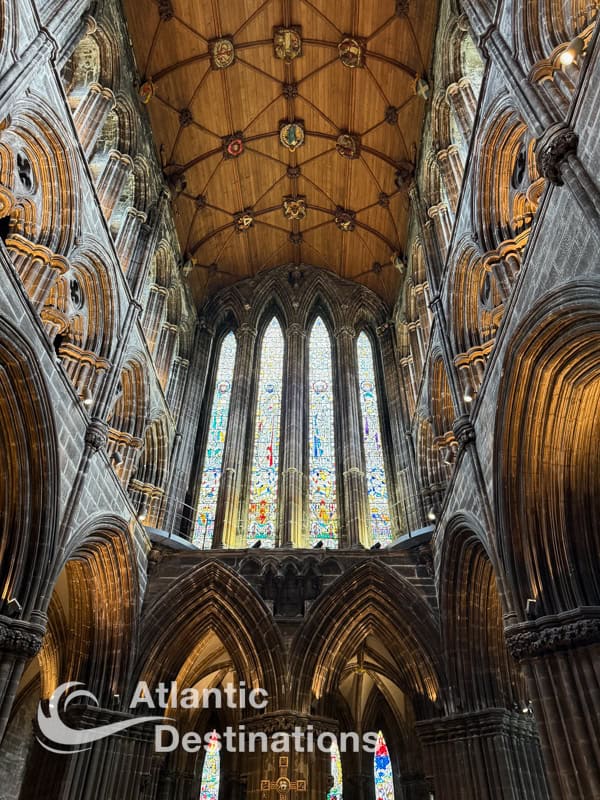
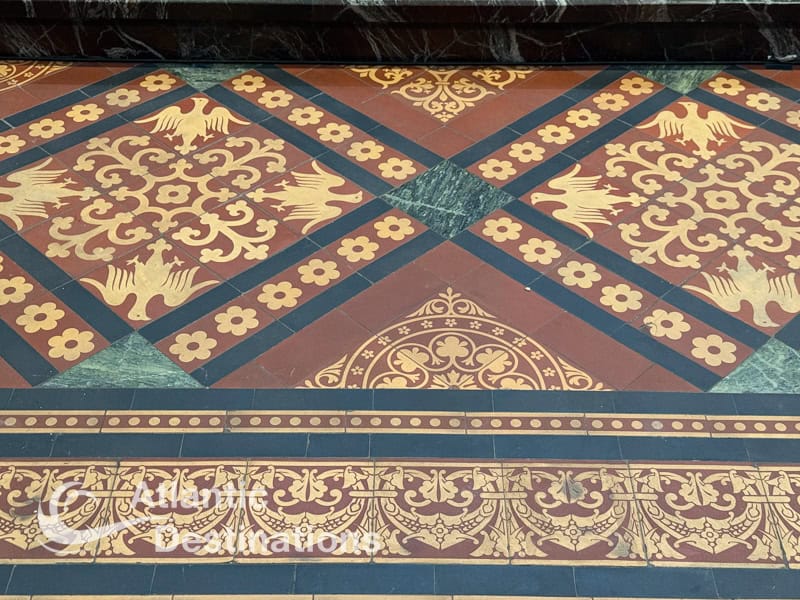
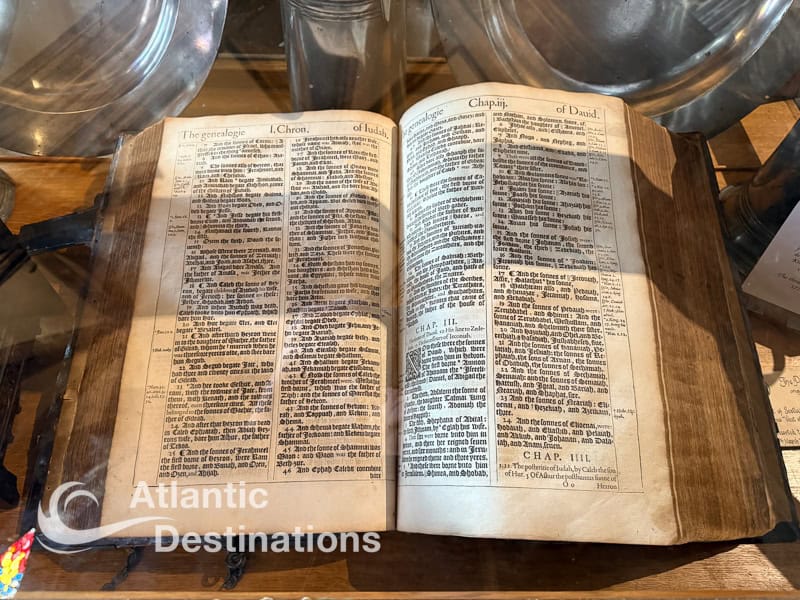
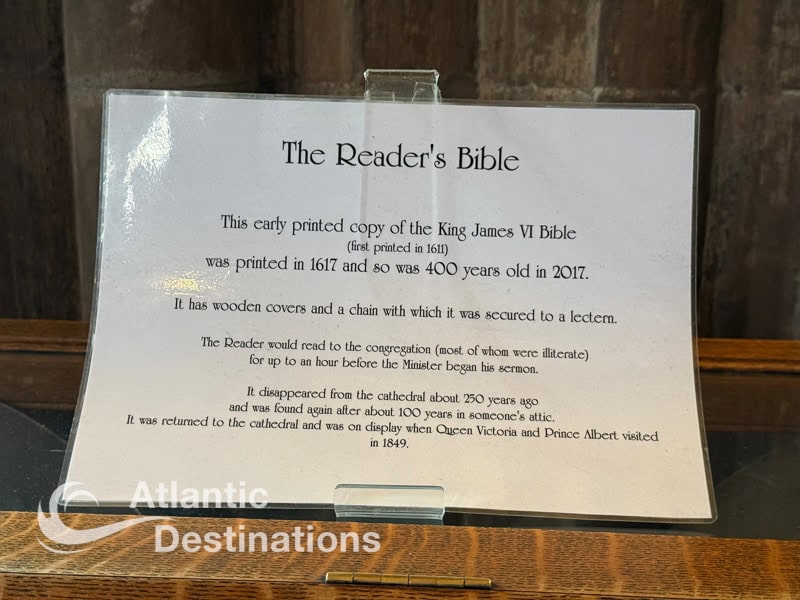
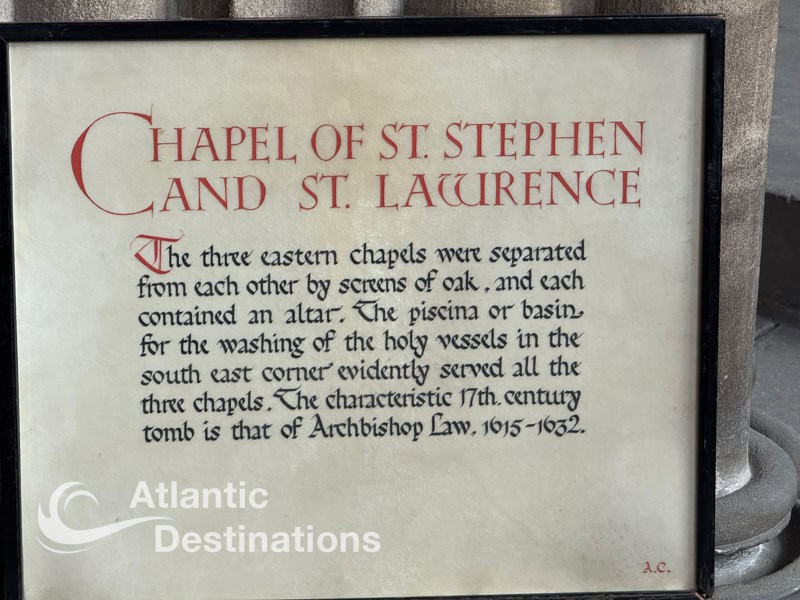
A gallery of my cathedral photos
Click the thumbnails to see larger versions of the images



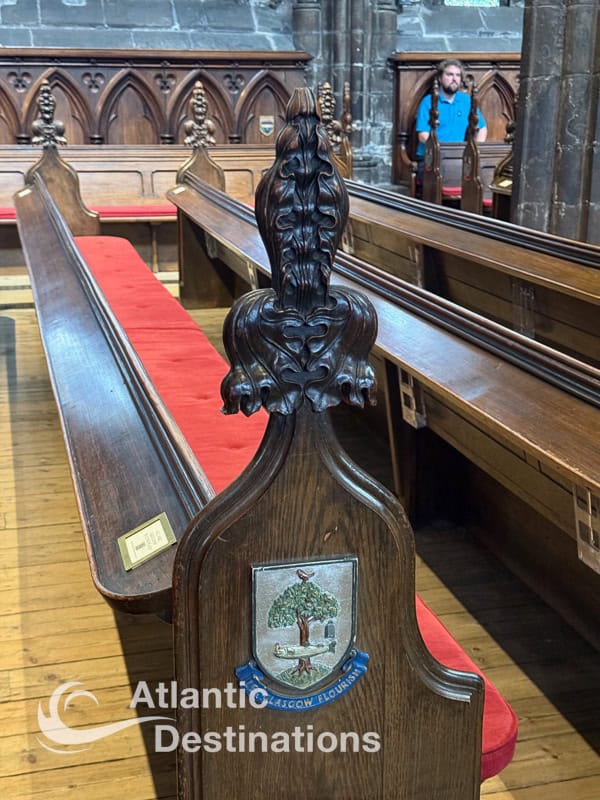
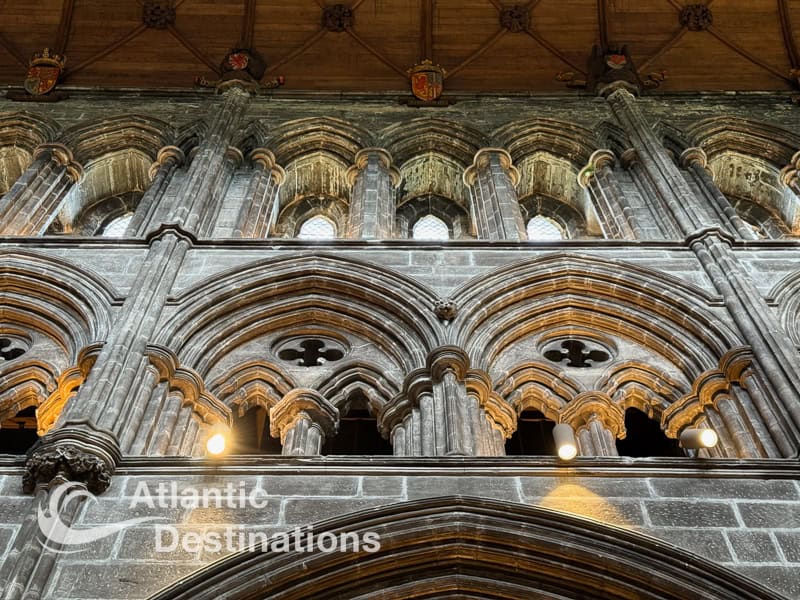
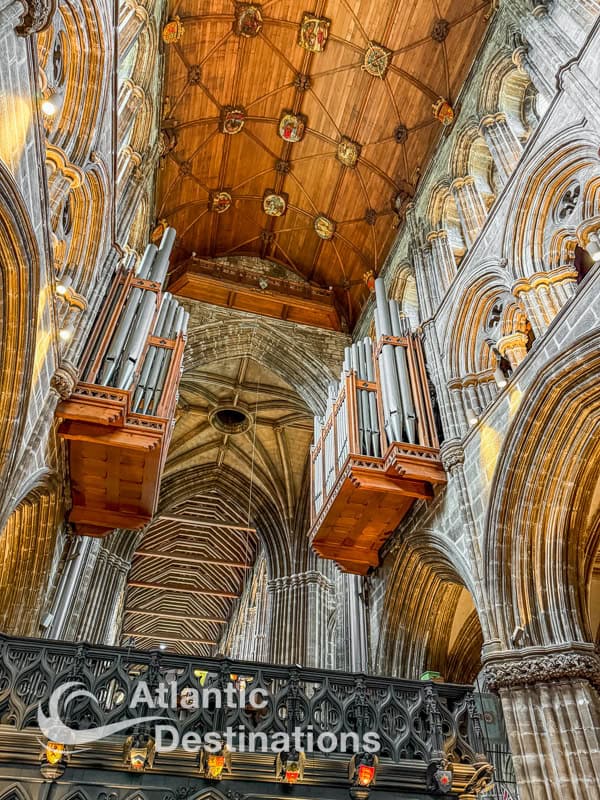
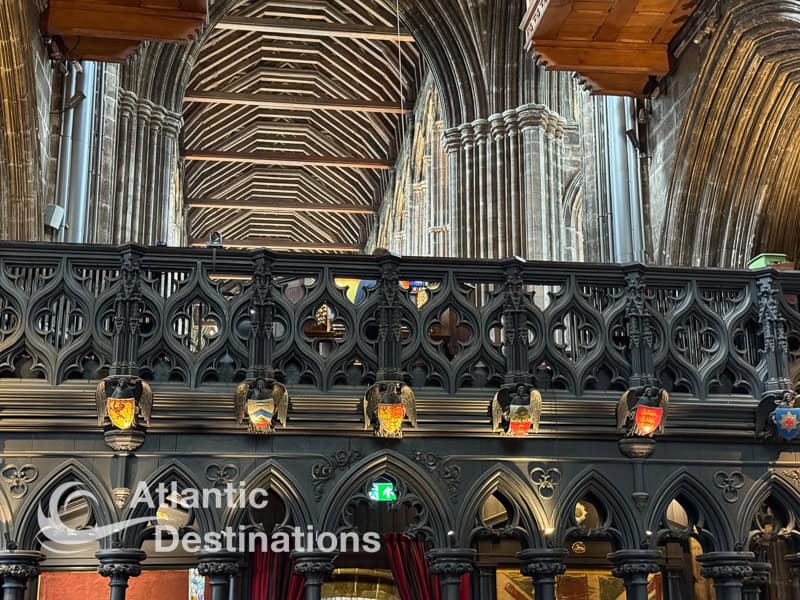


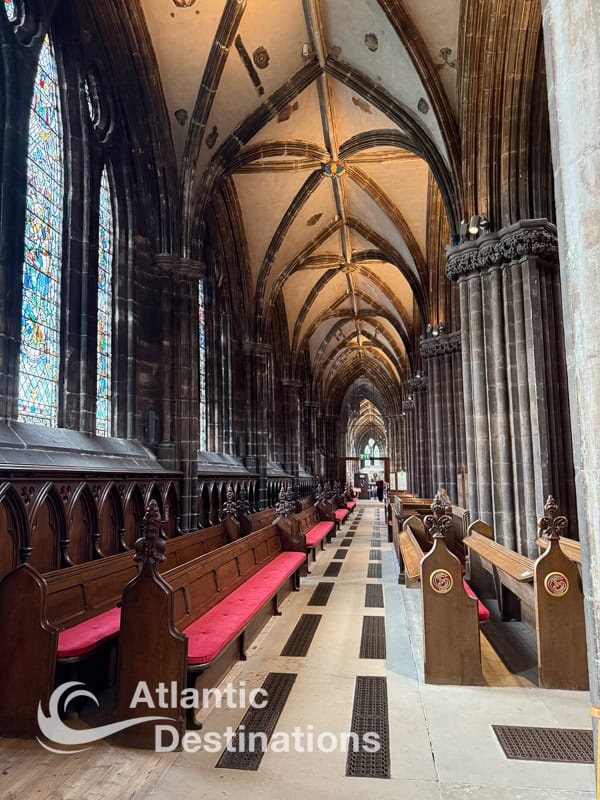
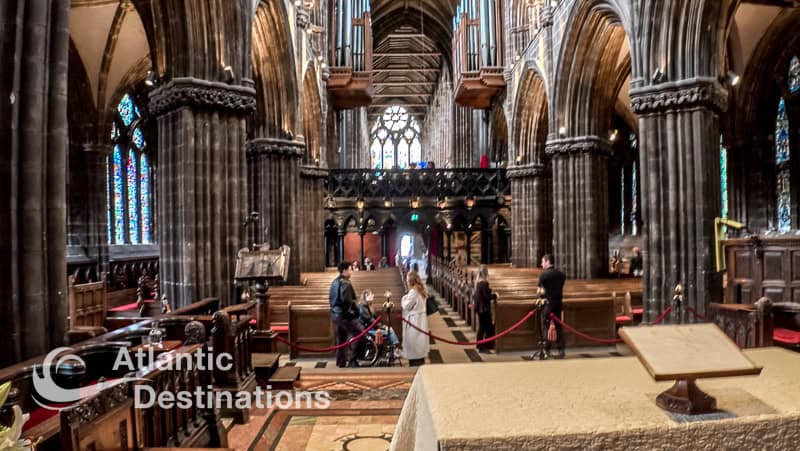

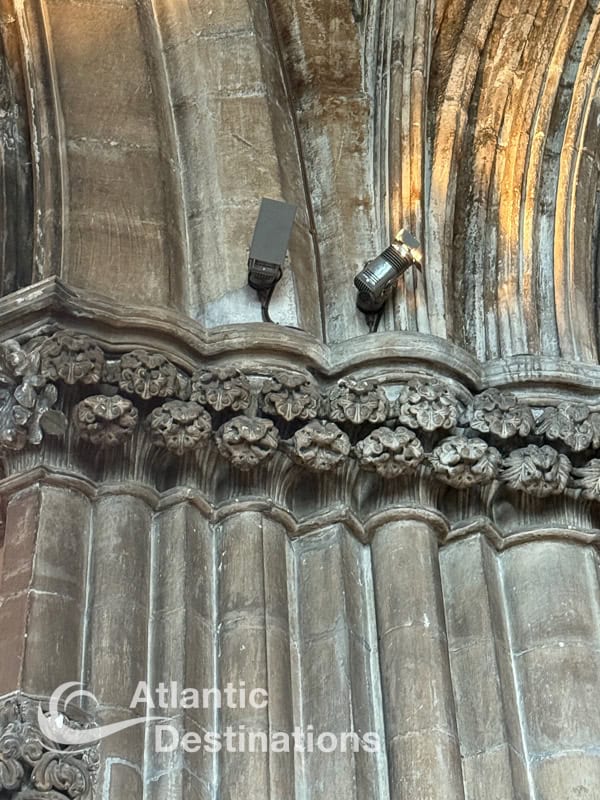
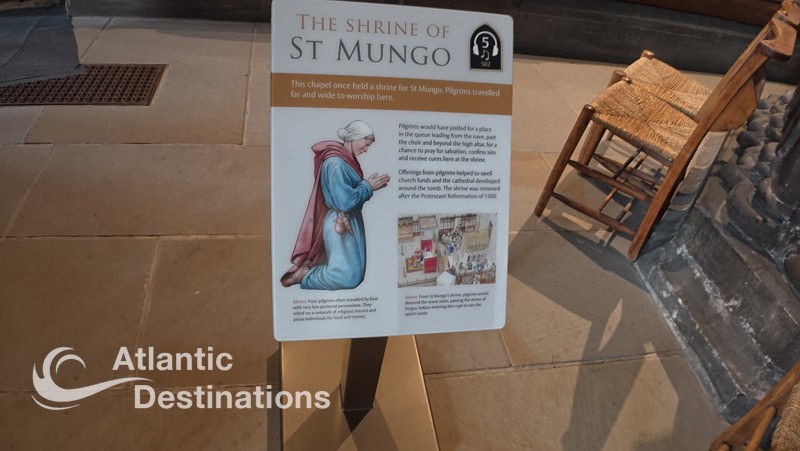

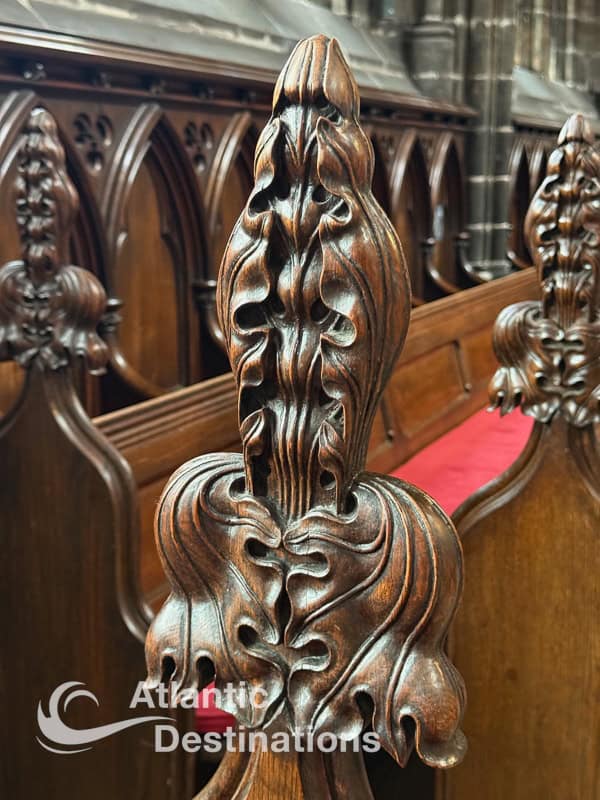


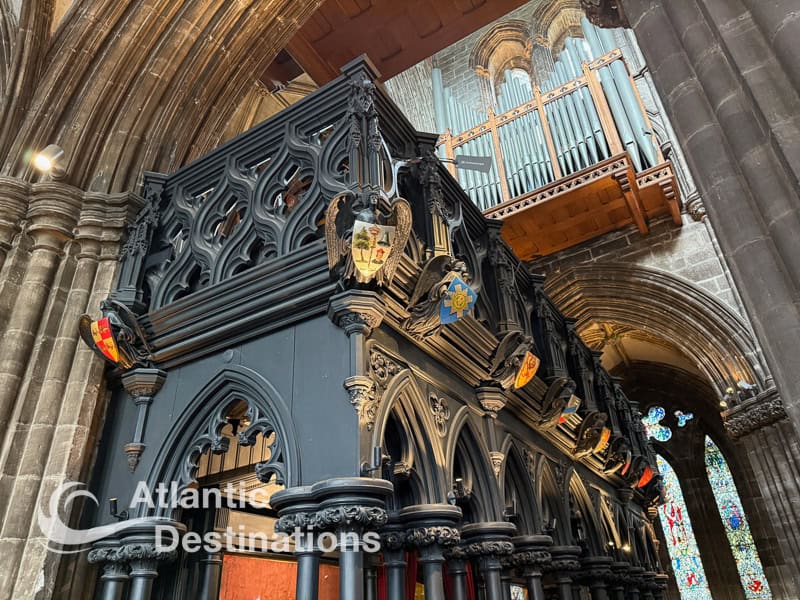

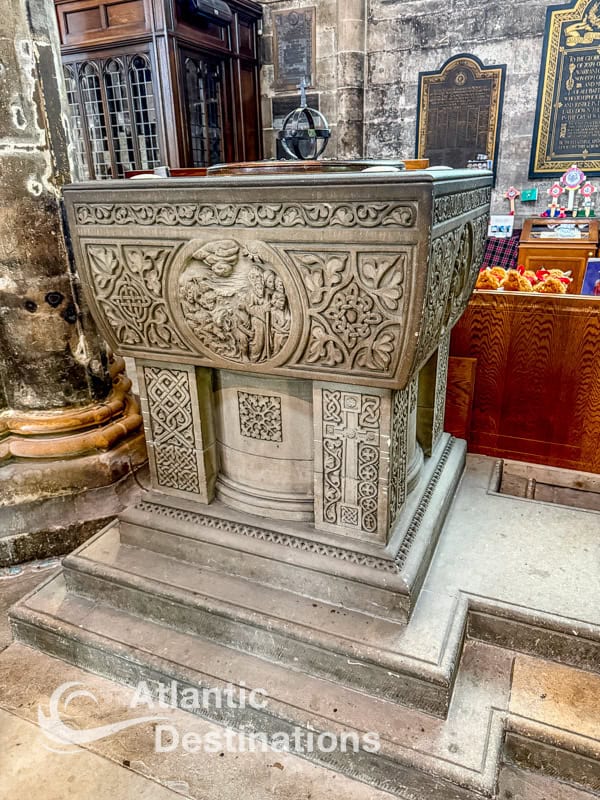
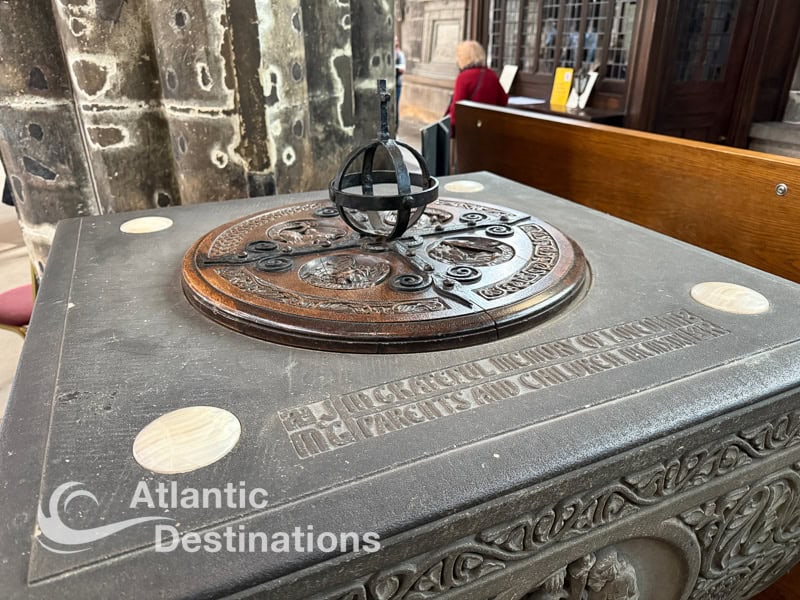
Oh, and don’t miss…

Glasgow Necropolis is not a church but it deserves a mention here. As mentioned above, the Victorian cemetery on the hill directly behind Glasgow Cathedral contains some of the most elaborately carved monuments in Scotland and provides the best exterior view of the cathedral from above. It’s free to enter and explore. Go up before or after your cathedral visit.
Also, Glasgow Cathedral is one of Scotland’s most recognized Outlander filming locations. The Lower Church appears in Season 2 as L’Hôpital des Anges, the Parisian charity hospital where Claire volunteers alongside Mother Hildegarde.
Conclusion
If you have half an interest in history and things medieval, this is the place for you. And if you don’t, it might just spark it for you.
Even if you don’t know the history, just looking at the construction of the building, the craftsmanship of the stone and wood, the oak roof, the lower church, will fill you with wonder if nothing else.
But I would recommend reading a bit to know the cathedral’s history beforehand, or take the guided tour. For me, I wish now that I had read my grandfather’s tour script before I visited. I walked through the same spaces he described, looked at the same details he pointed out to visitors for years, and understood almost none of what I was seeing.
I walked past all of it.
If I go back — and I will go back — I’ll take a private tour with my grandfather and his script.
Things to know before visiting the cathedral
Glasgow Cathedral is located in the East End of Glasgow, an easy walking distance from the city center. Guided tours are offered most weekdays between 11 am and 2 pm. Tours are free but a small donation to the cathedral is appreciated.
- Entry is free. Glasgow Cathedral is a working church and Historic Environment Scotland site. But to be safe, please refer to Glasgow Cathedral’s website for current information.
- Opening hours vary by season and services. Check the Historic Environment Scotland website before visiting.
- Guided tours: volunteer guides are available inside the cathedral. Ask at the welcome desk near the entrance. They are knowledgeable, enthusiastic, and free.
- Getting there: the cathedral is at Castle Street, a 20-minute walk from Glasgow city centre or a short taxi ride. The Necropolis is directly behind it — allow time for both.
- Allow a minimum of 90 minutes. Two hours if you want to explore the Lower Church properly and walk the Necropolis.
A short glossary for first-time cathedral visitors
I didn’t know most of these words either until I started writing this post. So here’s the medieval cathedral terms it’ll be helpful to know before you visit:
- Nave: the main central hall of the cathedral, running from the west entrance toward the altar. Where the congregation gathered. In Glasgow Cathedral, the nave runs 285 feet from west to east.
- Quire (Choir): the architectural section east of the nave screen, where the clergy and choir singers were seated. Not to be confused with the singing group, though the word is the same.
- Pulpitum (Quire Screen): the carved stone partition separating the nave from the quire. Glasgow’s is the only one remaining in Scotland.
- Chancel: the area around the high altar, at the eastern end of the cathedral.
- Transept: the cross-arms of the cathedral that give it its traditional cruciform shape. Glasgow’s transepts are non-projecting, meaning they don’t extend beyond the main walls.
- Crypt (Lower Church): the lower level built into the hillside beneath the main cathedral floor. In Glasgow this is where St Mungo’s shrine is located.
- Sacristy: the room where clergy prepare for services, storing vestments and sacred vessels. Glasgow’s sacristy dates from the 15th century and has a mosaic floor laid in 1816.
- Baptismal Font: the basin used for the sacrament of baptism, typically located near the entrance of the church to symbolize entry into the faith.
- Flagon: a large handled vessel used to hold communion wine. The Lower Church holds a set of historic pewter flagons as part of its ancient communion collection.
- Piscing: a small niche in the wall, filled with water, used to wash the communion vessels after a service. Glasgow Cathedral has one in the south-east corner of the chancel.
- Aisle: the passages running parallel to the nave on either side, separated from it by the line of pillars.
- Boss: a carved decorative keystone at the intersection of vaulting ribs on a ceiling. Glasgow Cathedral’s Blackadder Aisle is noted for one of the finest collections of carved ceiling bosses in Scotland.
Other Glasgow churches worth visiting
Glasgow Cathedral is the most famous of the city’s churches and cathedrals but there are several other churches worth knowing about with genuine historical weight and public access.
- Govan Old Parish Church sits on the south bank of the Clyde and houses the Govan Stones — 31 early medieval carved monuments dating from the 9th to 11th centuries, discovered in the churchyard after lying hidden for a thousand years. One stone sarcophagus is said to contain the remains of St Constantine. Free entry, volunteer guides on site. One of the most undervisited historically significant sites in Scotland.
- Mackintosh Queen’s Cross Church is the only church Charles Rennie Mackintosh ever built, now serving as the headquarters of the Mackintosh Society and open to visitors. The architecture is Modern Gothic with signature stained glass and geometric carvings. Also functions as a music and theatre venue.
- St Aloysius Church, Garnethill is a Baroque Jesuit church near the city centre whose ornate interior surprises visitors expecting the restrained aesthetic of Scottish ecclesiastical architecture. Marble altars, decorated ceilings, side chapels. Open to visitors during daylight hours.
- St George’s Tron Church stands on Buchanan Street in the heart of the city centre. Early 19th century, Baroque influences, impressive tower. An active congregation that welcomes visitors.
FAQ
Is Glasgow Cathedral free to visit?
Yes — Glasgow Cathedral is free to enter. It is managed by Historic Environment Scotland and open to the public. Voluntary donations are welcome. Guided tours with volunteer guides inside the cathedral are also free — ask at the welcome desk on arrival.
How old is Glasgow Cathedral?
The current cathedral building was begun in 1233, making it approximately 800 years old. The site itself has been a place of worship for over 1,500 years, blessed by St Ninian in AD 397. It is the oldest building in Glasgow.
Did Glasgow Cathedral appear in Outlander?
Yes — the Lower Church crypt was used as an Outlander filming location in Season 2, standing in for L’Hôpital des Anges, the Parisian charity hospital where Claire volunteers alongside Mother Hildegarde. It is one of several Glasgow Cathedral Outlander filming locations used in the series.
How long should I allow to visit Glasgow Cathedral?
Allow a minimum of 90 minutes for a self-guided visit. Two hours is more comfortable if you want to explore both the Upper Church and the Lower Church properly. Adding the Glasgow Necropolis next door requires an additional 30 to 45 minutes.
Are there guided tours of Glasgow Cathedral?
Yes — volunteer guides are available inside the cathedral and their tours are free. For a more structured Glasgow Cathedral tour, several operators including Viator offer guided walking tours of Glasgow that include the cathedral as a key stop.
Did Glasgow Cathedral survive the Reformation?
Yes — Glasgow Cathedral is the only medieval cathedral on the Scottish mainland to have survived the Reformation essentially intact. It was protected by the craftsmen and tradespeople of Glasgow who formed a militia to defend it from the Reformation mobs in the 1560s.
Have you visited Glasgow Cathedral, or does it belong on your Scotland list? Leave a comment below — and if this post helped you understand what you were looking at, save it for your next visit.
Plan your trip with our favorite travel resources
- #1 online accommodations booking platform. Booking.com
- Global guided tours with reviews: Viator
- Find, compare, and rent cars: DiscoverCars
- Buy travel insurance: SafetyWing
Got a question or a comment? Go to the contact page and send a message using the form.
