E-bike tours for beginners: my first e-bike adventure in Madrid
Share:

I’d heard about e-bikes before, but it seemed a bit like cheating, you know?
Nova Scotia influencers Davey and Sky raved about them on one of their YouTube videos and my Vancouver Island friend, also called David, urged me to buy one saying it would be a game-changer for “those of us with a few miles on the odometer.”
But until Madrid, I’d never actually tried any e-bike tours.
(If you’re planning a trip, you can also read my complete Madrid itinerary.)
Are e-bike tours worth it — especially for beginners and older travelers?
If you don’t have the time to read my beautifully crafted post, no worries — here’s the scoop.
The short answer is yes. E-bikes make touring easier, safer, and far more enjoyable without removing the sense of accomplishment.

Back in the day, I used to be an avid and enthusiastic cyclist — back when energy came easier and recovery was something that happened in a few minutes instead of half an hour! I even bought a traditional bike again a couple of years ago thinking I’d rekindle that old freedom. The reality? I winded quickly, hills felt like mountains, and I remember wondering how on earth I ever rode so fast as a kid.
Finding a new way to see Madrid on an e-bike tour
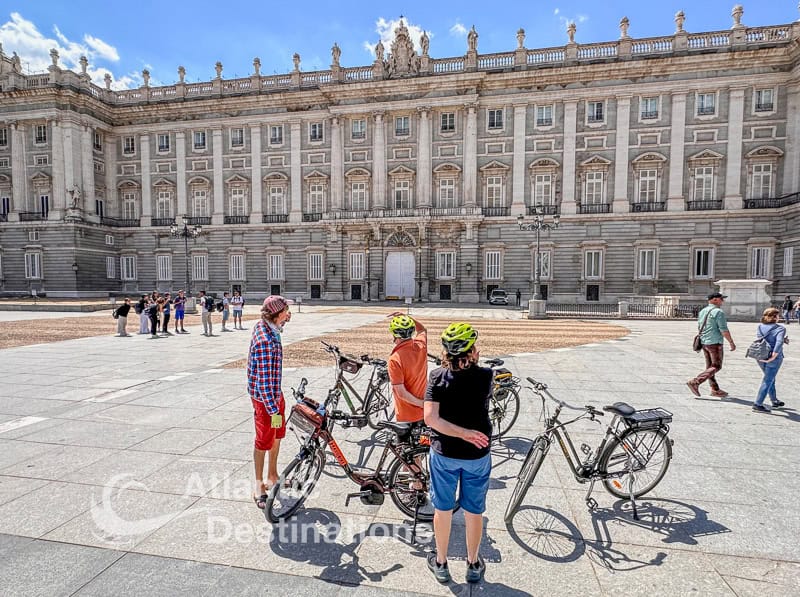
But that was a couple of years ago and I’ve actually been exercising regularly this year. So when I was planning my Madrid itinerary, I thought I might try a cycle tour through the city — you know, something different and more personal than the regular bus or van tours. Those are fine for a quick overview, but it’s hard to get a decent photo when you’re whizzing by a landmark and a tree decides to suddenly photobomb the shot.
Then I saw a three-hour e-bike tour in Madrid. It sounded like a good compromise — active, but not exhausting. My first thought: Hmm… that might be an adventure.
How the e-bike actually helps (and why e-bike tours aren’t hard)
What makes an e-bike different from a regular bike is the motor + sensor system that supports your pedalling instead of replacing it. Most e-bikes use a “pedal-assist system” (PAS) which means you still have to pedal, but the bike’s motor kicks in to amplify your effort.
There are two main types of sensors:
- Cadence sensors detect simply that you’re pedaling and then engage the motor, which sometimes results in a more on-/off feel.
- Torque sensors, which are the more refined option, measure how hard you’re pedaling and deliver motor assistance proportionally — smoother and more intuitive. This is the type of e-bike we had in Madrid.
Many tour-type e-bikes are set up to make hills feel far less daunting. For example, increasing the PAS level is a lot like shifting to an easier gear — the motor takes up much of the load.
In plain English: the bike felt like a normal ride, but whenever a hill threatened… I just nudged the assist up and in an instant — it became easy. And that’s exactly why I could keep up, enjoy the ride, and still feel like I’d earned the views.
The ride itself: what an e-bike tour feels like for beginners
If you’ve never tried one of these contraptions, you ought to give it a go.
Madrid is surprisingly hilly, full of winding streets and steady climbs. On a regular bike, that might have been a struggle, but with the e-bike, every hill became a breeze — literally. When an incline appeared, I’d just turn the power up a notch and glide right up.
The Madrid tour was run by Bravo Bikes and they put on an excellent tour with a knowledgeable and patient guide – you can find the tour in Viator as Madrid E-Bike Small Group, a five-star tour with 153 positive reviews.
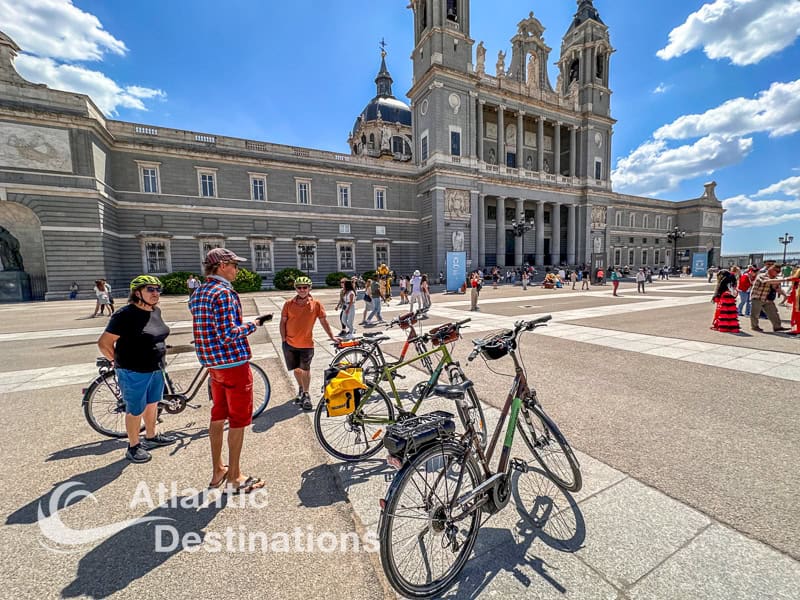
Our small tour group made it even better: just me, our guide, and a lovely couple from Australia. The tour felt relaxed and personal. We stopped often to chat, take photos, and wander through narrow laneways where no bus could possibly fit. It was the kind of exploration you just can’t get on a bus — up close, unscripted, and easy-going.
Our guide was excellent, keeping an eye on us and adjusting the pace so we could all stay together. It felt like sightseeing with friends rather than a formal tour.

The honest bits (because e-bike tours aren’t perfect)
It wasn’t all effortless, mind you.
Tight spaces: I hadn’t been on a bike in years, and my bike balance has suffered from neglect!
In one street, the space between the queued up cars and the concrete posts at curbside was a bit tight and I kept wanting to fall over onto the cars — something the owners wouldn’t be very happy about. So I decided the safest option was to hop off and walk the bike through to the end of the street — no shame in that!
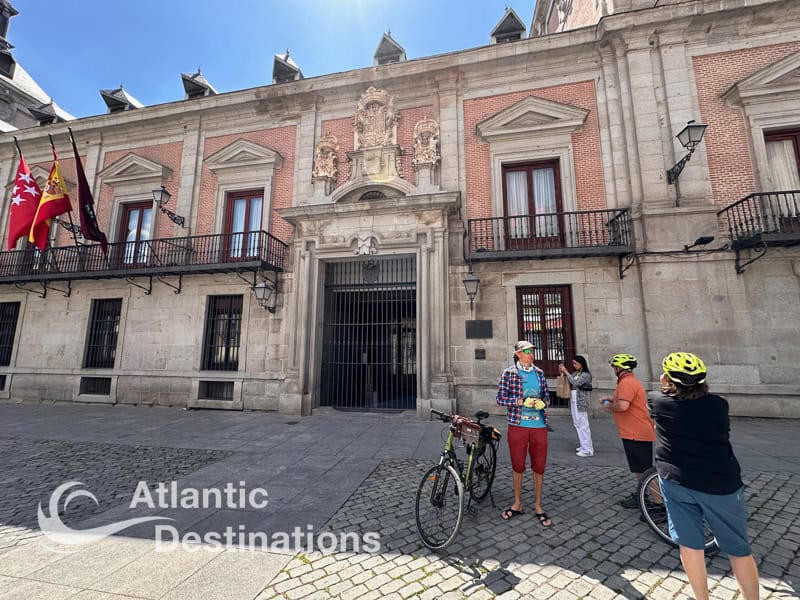
Our guide waited with the group for me to catch up and we continued.
Creative photography: Trying to steer with one hand and hold a camera with the other didn’t seem like a great idea (we just mentioned my balance). So filming the ride had to take a back seat…
I could take pics when we stopped to look at things, but filming the ride was out of the question. I’ve since bought the correct harness… so next time, I’ll be ready.
A bridge too far?: By the third hour, my right knee was protesting — but once again, the e-bike saved the day. I could pedal mostly with my left leg and still keep up with the group thanks to that little electric miracle humming beneath me. And the knee recovered quickly after the ride, which was great as I was doing a lot of walking…

Are e-bike tours worth it? Pros & cons
Pros
- Great for hills
- Less effort but still “real cycling”
- More immersive than a bus tour
- Small group format
- Easy to stop for photos
- Ideal for beginners, older travelers, and anyone who wants a gentler way to explore a city.
Cons
- Balance takes a moment to readjust
- Not ideal for filming while riding
- Long tours may bother sensitive knees
- Tight urban spaces can be challenging
FAQ: Q&A about e-bike tours and touring Madrid
Are e-bikes safe for beginners?
Yes. Most e-bike tours in major cities, including Madrid, use pedal-assist bikes designed for casual riders. If you can ride a regular bicycle, you can ride an e-bike. The electric motor helps with hills and speed, so you can focus on steering and balance instead of exertion. Guides also pace the group according to the slowest rider.
Do I need to be physically fit to take an e-bike tour?
Not especially. E-bikes are built to make cycling easier, not harder. The pedal-assist motor reduces the amount of physical effort you need to climb hills or ride for long stretches. You’ll still pedal, but at a comfortable level. Many riders (myself included) find e-bikes much more manageable than traditional cycling.
How fast do e-bikes go on city tours?
European “pedelec” e-bikes are capped at around 25 km/h (15.5 mph) when using pedal-assist. Tours typically travel slower than that—often 10–15 km/h—so the group stays together and can safely navigate narrow streets, bike lanes, and pedestrian areas.
Can older travelers use e-bikes?
Absolutely. In fact, e-bikes are especially popular with travelers in their 50s, 60s, and 70s who want to explore cities without overexerting themselves. The assist levels can be adjusted to provide more support on inclines or longer climbs.
Do I need cycling experience to join an e-bike tour?
You should be comfortable riding a regular bicycle, but you don’t need recent experience. The motor makes the ride smoother and easier than traditional biking. If you haven’t cycled in years, most guides offer a short practice session before the tour starts.
Are Madrid’s hills difficult on an e-bike?
Madrid is surprisingly hilly, but the pedal-assist makes climbing very easy. When you approach an incline, you simply raise the assist level and the motor boosts your pedaling effort. Most riders say the hills feel easier than they expect.
Is an e-bike tour better than a bus tour?
They serve different purposes. Bus tours give you a broad overview of the city, but an e-bike lets you:
– explore backstreets and small squares,
– stop for photos anytime,
– chat with your guide at each stop,
– and experience the city at a slower, more human pace.
It’s more immersive—and far better for photography (and filming when you have the right chest harness for your GoPro/ DJI Action camera.
What should I wear for an e-bike tour?
Wear comfortable clothing you can move in and closed-toe shoes with good grip. Sunglasses and sunscreen are recommended, especially for sunny Madrid days. Some tours provide helmets; others let you bring your own.
Can I take photos or video while riding?
Not safely. It’s better to wait for scheduled stops to take photos or film. If you want POV footage (like GoPro chest-cam video), bring a harness so your hands remain on the handlebars. Many tours stop frequently for photos.
Are e-bike tours worth the money?
In my experience—yes. You cover more ground than a walking tour, get closer than a bus tour, and don’t end the day exhausted. For many travelers, it’s the perfect balance of adventure and comfort.
Do e-bike tours run year-round in Madrid?
Most of them do. Madrid’s climate is mild for much of the year, though summer heat waves and occasional winter rain may affect availability. Always check with your tour operator for seasonal schedules.
Conclusion: would I take an e-Bike tour again?
Absolutely. I even had another e-bike tour booked in Berlin back in September, but that trip was postponed and the ride cancelled.
But, there WILL be a “next time.” The Madrid e-bike experience turned out to be a highlight of my visit — more fun than I expected and surprisingly freeing.
I went into it thinking an e-bike might make the trip too easy. What I found was the opposite: it made the city feel more accessible, more human, and the ensured the trip was one I’ll never forget.
You can read the full story of my Madrid itinerary — including the Royal Palace tour, an attempted lunch at the Café de Oriente, the e-Bike tour, and a few other adventures before leaving for home.

Also, I have video footage of the trip languishing on my hard drive and I should do something with it all — so watch for a video of the trip soon too!

About the author
Derek Cadzow is a travel writer and photographer behind AtlanticDestinations.com. He focuses on accessible travel for mature adventurers, blending practical experience with first-person storytelling. Derek writes for travelers aged 40–75 who want realistic, honest insights about tours, destinations, and on-the-ground experiences.
Before you go…
Plan your trip with our favorite travel resources:
- Viator: huge catalog of organized tours in just about anywhere on earth you can imagine.
- Booking.com: a global network for booking accommodations complete with user reviews.
- Trainline.com: Europe’s leading train and coach app. Get the best available prices, times, and train/bus tickets.
- DiscoverCars: find, compare, and rent cars around the world.
- SafetyWing: Travel insurance
Thanks for joining us on this new adventure! Got a question or a comment? Go to the contact page and send a message using the form.