The ultimate fun getaway: 3 days in Barcelona, Spain
Share:

Before touching down in Barcelona for a business trip earlier this year, my only brush with the city had been through television: watching the Spanish Grand Prix in the early 1970s and the Olympics in 1992.
I honestly didn’t know what to expect beyond some great architecture and a coastal vibe. What I found, however, was a city brimming with culture, delicious food, and an undeniable coolness that could make even the most disinterested traveler perk up.
Over the course of my whirlwind 3 days in Barcelona, I tried to soak in as much of it as possible – here’s how my brief but packed stay unfolded.
How I packed exciting destinations into just 3 days in Barcelona
Barcelona is the capital of Catalonia, an autonomous community of Spain. It has its own language (Catalan), its own traditions, and a sense of pride that’s hard to miss. It’s this blend of Catalan identity mixed with Mediterranean charm that sets Barcelona apart.
I was determined to see as much as I could in my short stay and a little homework and pre-booking beforehand set up my itinerary so that, once there, all I had to do was enjoy the trip.
I’ve added links below to help you set up your tour should you be lucky enough to visit this exciting and lively city.
Getting into the city from the airport
I like overnight flights from America to Europe, arriving at sunrise and being able to see the new day dawn over my destination.
And so I arrived early in the morning at Barcelona–El Prat Airport to a relatively empty facility. This was a good thing because it gave me a little time to find and figure out how the subway system works. It didn’t take long because it’s pretty straightforward.
(Click these thumbnail pictures to see a larger version.)
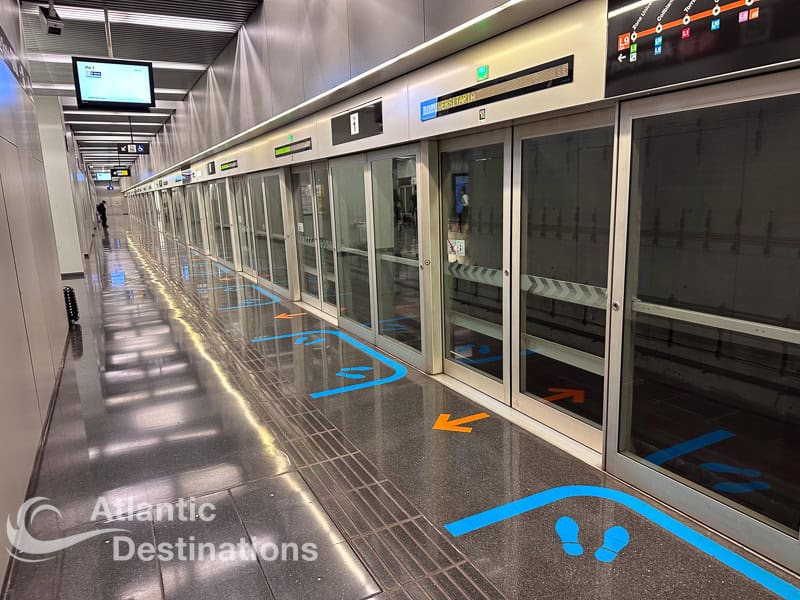
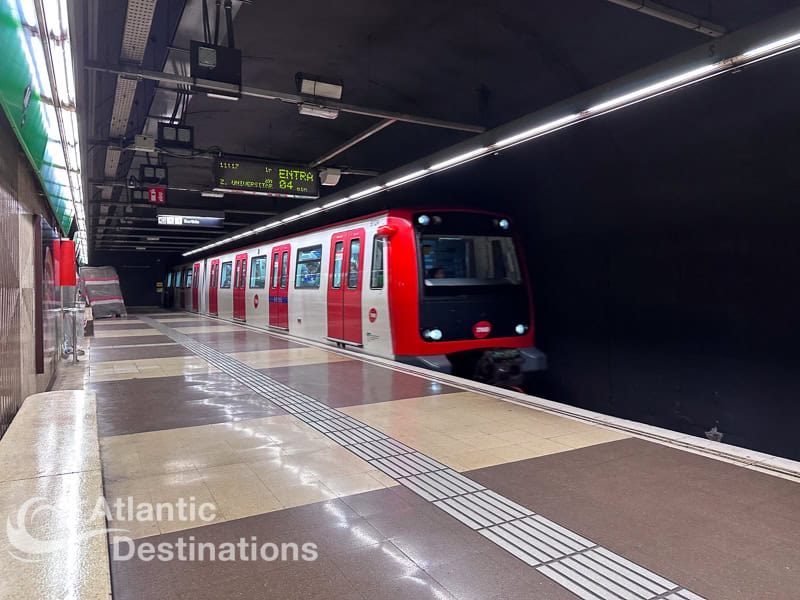

It’s big – there are many different subway lines going all over the city, and when you need to transfer from one line to another there may be several levels to navigate. But have no fear, escalators and elevators (lifts) eliminate the need to use stairs and everything is color-coded and well-marked in multiple languages, so it doesn’t take much to learn your way around.
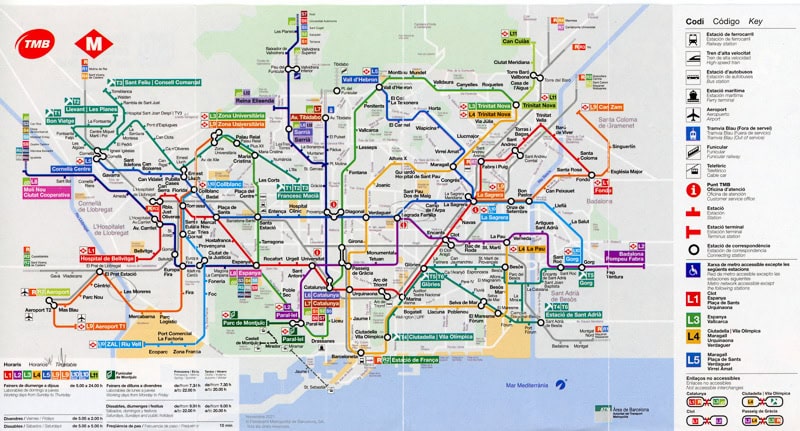
Each station has a map of the subway system (above) to help you figure out where you are, where you want to go, and how to get there. And the locals are friendly and helpful – they helped me buy my first pass from the subway ticket machine and the station officials also helped when I had questions about how to get to a particular platform.
You don’t have to wait more than a few minutes for a train and it’ll get you to your destination quite quickly. The stations and the metro were clean and well lit. Even when it was busy during rush hour, it didn’t feel overwhelming.
I also found that the Apple maps app on my iPhone was extremely helpful (I’m sure Google maps and Androids are just as good). When searching for a route and tapping the public transport button, it gives you very detailed instructions for every part of the trip: finding the station, getting on the metro, directions for the walking part of the trip – I couldn’t put a foot wrong!
So I caught the first subway train out of the airport and traveled to a station that was within walking distance of my hotel.
I bought a one-way ticket, but later learned that I should have bought the multi-day pass that typically ends up being more economical and saving time. Trust me on this one—just get the pass if you plan to use the subway a lot.
If subways are not your thing, you can also catch the airport shuttle that will take you to the city center. It stops at Plaça de Catalunya, where you’d need to catch another bus or subway to your final destination.
There’s also private and semi-private transportation. Click these links to check prices and availability:
▶︎ BOOK Airport to the city: Private Transfer in a MERCEDES VAN
▶︎ BOOK City to the Airport: Departing Barcelona
Day 1: Bus tour, architecture, and a city filled with Vespas
After settling in at my hotel and getting some breakfast I set off on my first tour: an open-top hop-on hop-off bus tour.
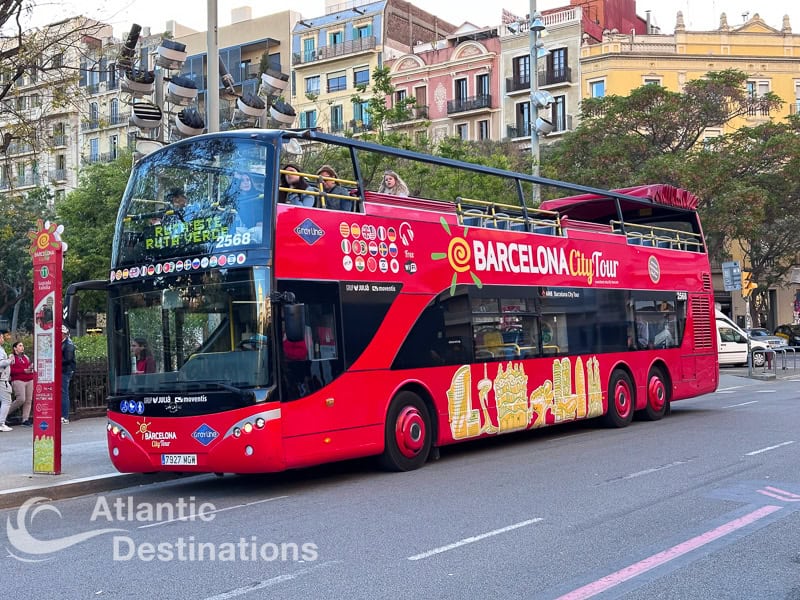
I love these kinds of tours as an introduction to a new city – in a matter of an hour or two, you get to see all the highlights of the city and you can choose which one(s) you’d like to spend more time with later. In Barcelona, that meant lots of unusual architecture, history, and an understanding of how the city was laid out, which is useful when you’re new to the place.
As you can see from the map (below), there are actually two tours you can take depending on what you’d like to see. I took the green tour starting at Placa Catalunya: the geographic center of the city, and continued on to see:
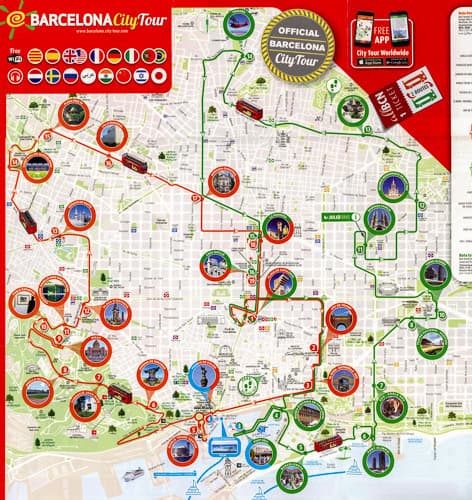
- The Port Vell, waterfront harbor,
- the Museu d’Historia de Catalunya for historical and culture heritage,
- the authentic Barceloneta neighborhood,
- Port Olimpic that brings together the city and the sea,
- the Zoo Poble Nou (also known as the Parc Zoològic de Barcelona) home to more than 4,000 animals from over 400 species,
- the Teatre Nacional Auditori performing arts center,
- the 38-story Torre Glories office headquarters of Aguas de Barcelona (AGBAR), a local water company,
- the world-famous Sagrada Familia basilica designed by Antoni Gaudí and under construction since 1882,
- the Recinte Modernista de Saint Pau designed by Catalan modernisme architect Lluís Domènech i Montaner,
- Park Guell, a park full of gardens and architectural elements designed by Antoni Gaudí,
- Tibidabo hill overlooking Barcelona and the surrounding coastline,
- Gaudí La Pedrera the last private residence designed by architect Antoni Gaudí,
- Casa Batllo, a UNESCO World Heritage site.
I pre-booked my ticket online, and the process was smooth. But I’d read in some reviews that, when boarding the bus, the online tickets were refused and you needed to have a printed paper one. Well as it turns out, this is not true! – I presented the digital ticket on my phone and it worked perfectly.
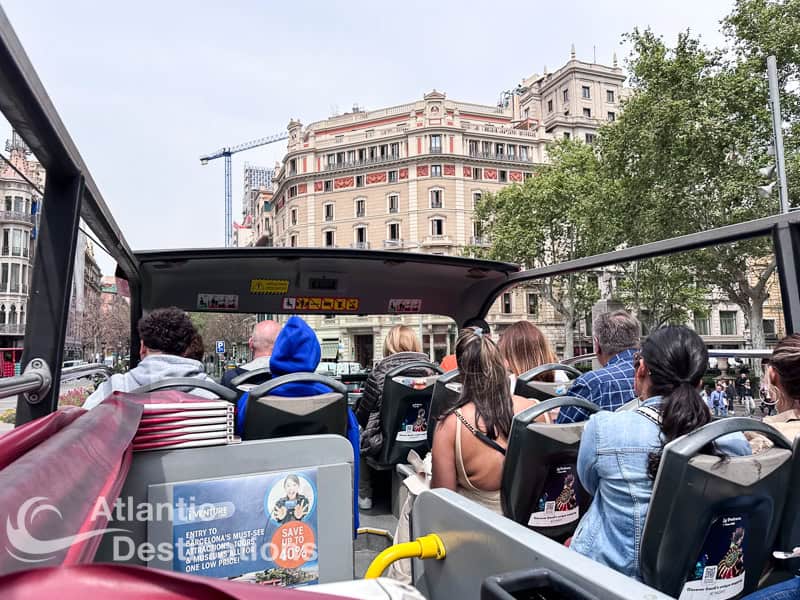
Boarding the big red double-decker bus, I chose a seat on the open part of the top deck so I’d have lots of opportunity to get unobstructed photos of the city attractions.
When you board, make sure to pick up your earbuds at the front door. When you get to your seat, make sure they’re working – otherwise switch seats quickly! The audio is synchronized with the tour and tells you about the city landmarks as you visit them. It’s available in many languages – just select the one you want and you’re ready to go.
One thing I noticed from the bus: scooters and Vespas are everywhere! And, to a visiting American, they’re remarkably muffled and quiet. With so many of them on the roads, allowances are made for parking and you can find these ubiquitous two-wheeled vehicles, as well as bicycles and e-bikes, parked in every available space.
If you’d like to book the hop-on hop-off bus tour, do it in advance to reserve your seat. This is the one I booked. Click this link to check prices and availability:
▶︎ BOOK Barcelona: 24 or 48-hour hop-on hop-off bus tour
Note that there are alternate tours that combine the bus tour with:
Day 2: Gaudí and the Sagrada Familia basilica
The second of my 3 days in Barcelona was centered around seeing architect Antoni Gaudí’s masterpiece, La Sagrada Família basilica. I’d already glimpsed the basilica on the open-top bus tour, but I wanted to see more of this unbelievable building, including the inside.
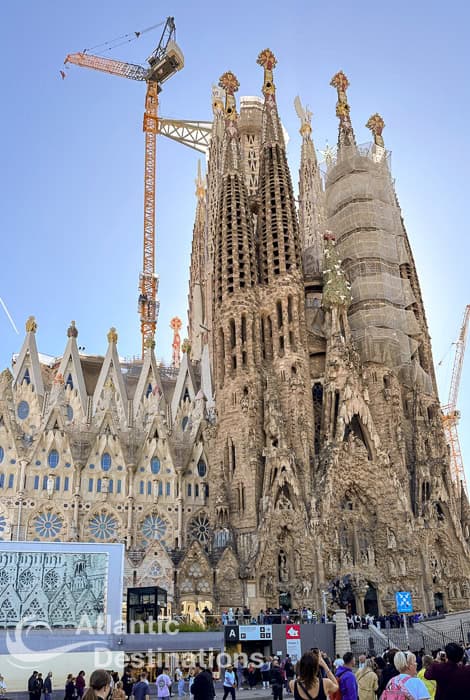
If you’ve seen pictures of this basilica, you know that there’s nothing like it anywhere else (except maybe Disneyland!). it’s impossible to fully grasp how massive and intricate it is until you’re standing right in front of it. Photos just don’t do it justice and it remains one of the most iconic and unusual buildings in the world.
So many people visit the basilica each year (more than three million) that even unguided tours are booked on a schedule – you can’t go in before your allotted time. I had a couple of hours to wait so I went for a walk around the plaza.
The plaza was buzzing, almost choked, with people, street performers, and—unexpectedly—outlets for Ben and Jerry’s, Five Guys, and McDonald’s, where I grabbed a snack while waiting for my tour. (Fun fact: in Spain, McDonalds still deep fries their apple pies and, if you’ve seen as much of life as I have, you’ll remember when they were deep-fried and unhealthily yummy in America too!)
There are souvenir shops, restaurants, a small park, and a museum for the Barcelona FC and former team star Lionel Massi (now with Miami). This gave me ideas for gifts for my two soccer-mad grandsons… see more about shopping below.
One thing you notice right away about the basilica: it has many spires that randomly shoot up from the main building — and they’re tall, very tall. Apart from the 38-story Torre Glories office building, the basilica towers over the rest of the city.
The exterior is adorned with carved figures and intricate patterns and, since it’s still under construction, it’s surrounded by construction cranes. One side has an unadorned plain poured concrete wall with column footings with exposed rebar, clearly the unfinished side of the basilica.

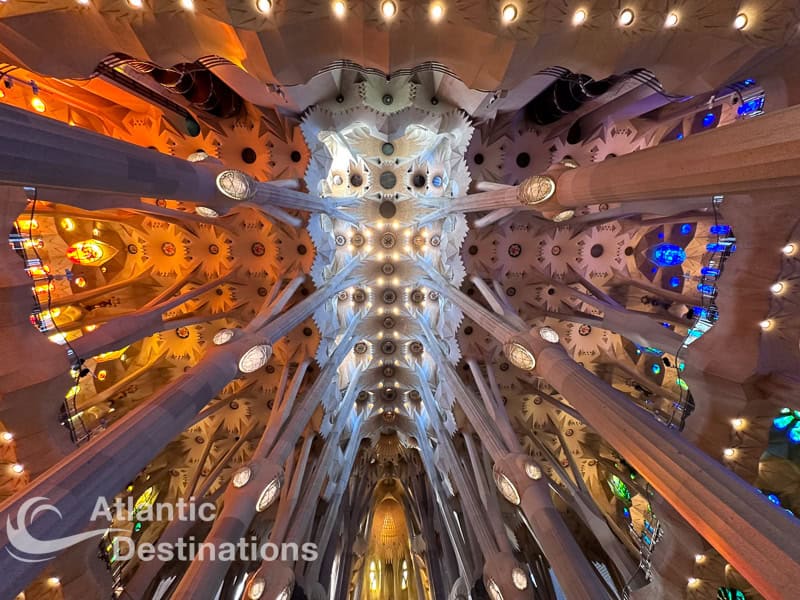
When you step inside the building, the first things to hit you are the towering columns that seem to split off into tree branches and the radiant hues from the vibrant and ubiquitous stained glass windows —it’s like nothing I’ve ever seen.
The basilica hall was not crowded, but there were still lots of people inside. There was a chapel and an active service going on for a congregation of visitors seated in the pews. There were old artifacts, and a tell-all display hall and builder’s workshop in the basement. It’s well worth the tour just for the architecture alone.
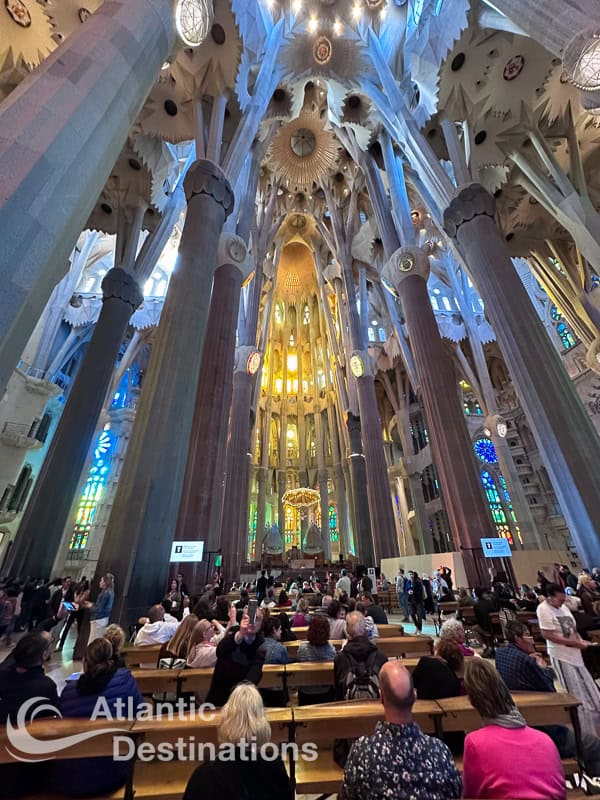
There’s also a tour that allows you access to the towers and it has a live guide.
One reminder: don’t forget to download the audio for your tour before you go (like I did!) – the link is on the online voucher you get when you book. Click the link and download the audio app — it tells you all about the history of the basilica, the meaning behind Gaudi’s symbolism and iconography, and more.
Gaudí’s work might not be for everyone, but you can’t deny the attention to detail and the sheer creativity at play here.
This is the tour I took — I booked it because its a self-paced audio tour, which allowed me to spend as much time as I wanted at each point of interest and not be rushed along by a guide with a timetable.
Click this link to check prices and availability:
▶︎ BOOK Barcelona: Sagrada Familia entry ticket with audio guide
Day 3: Montjuïc Park, a funicular, and a castle on a hill
For the final day of my 3 days in Barcelona, I simply wanted to ride the cable cars. I hadn’t ridden on a cable car since I was a small boy with my Dad in Norway and I was looking forward to re-live, at least, part of the experience.
The cable car takes you up the side of Montjuïc Mountain to Montjuïc Park, a place I remember well from reading all about the Spanish Grand Prix car races in the early ‘70s.
I took a bus from my AirBnB all the way to the cable car (about 50 minutes), but I found that to get there, I also needed to take the funicular, an inclined railway that operates with a cable and takes you up the side of the mountain
The funicular ride was scenic enough, but it was the aerial cable car that truly stole the show for me.
(Click these thumbnail pictures to see a larger version.)
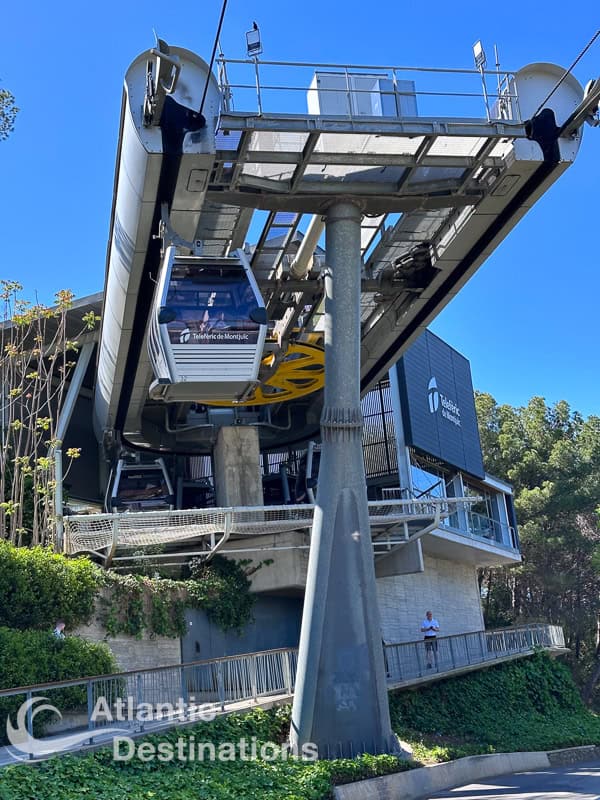


Gliding up the mountain, I was greeted with spectacular views of the city unfolding beneath me. The cityscape, the distant mountains, and the sparkling sea—it all came together in a way that reminded me why people fall in love with this place.
At the top of Montjuïc, I was pleasantly surprised to find stunning views of Barcelona and the Mediterranean Sea – and a castle!
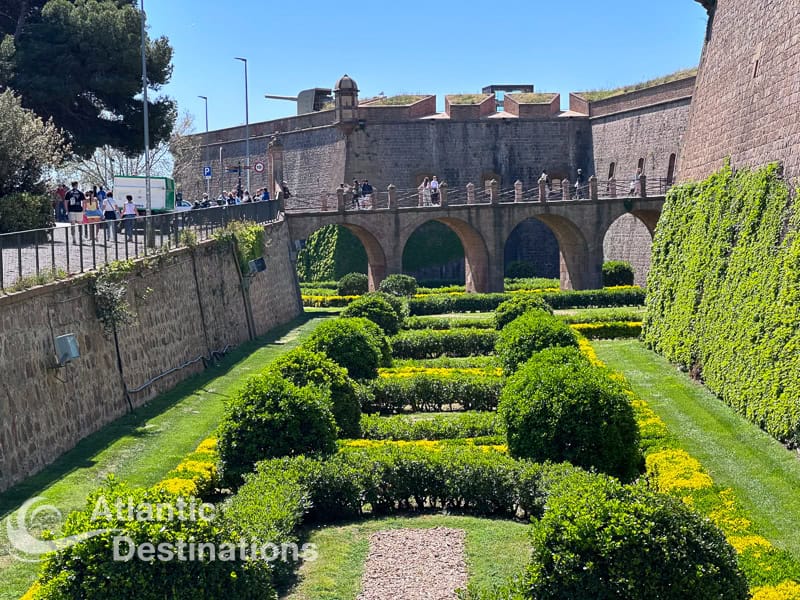
I had no idea there was a castle — my afternoon was now abruptly rescheduled. I decided to spend the next few hours exploring the castle and I wasn’t disappointed.
Castell de Montjuïc is a centuries-old fortress, dating back to 1640. It once played a key role in the city’s defense. It’s in pristine condition and this 1600s castle looked like it had been completed only recently.
Walking inside the castle’s main building to the parade courtyard, I sat at the outdoor tables for a small lunch (and some much-needed gelato!). And of course, I had to have a Pepsi since I recently discovered it was invented in my new home town of New Bern, North Carolina.
It was easy to let your mind imagine what it was like several hundred years ago and see the soldiers parading the courtyard or on duty up on the ramparts. Nowadays concerts and other cultural events are often held here.
(Click these thumbnail pictures to see a larger version.)
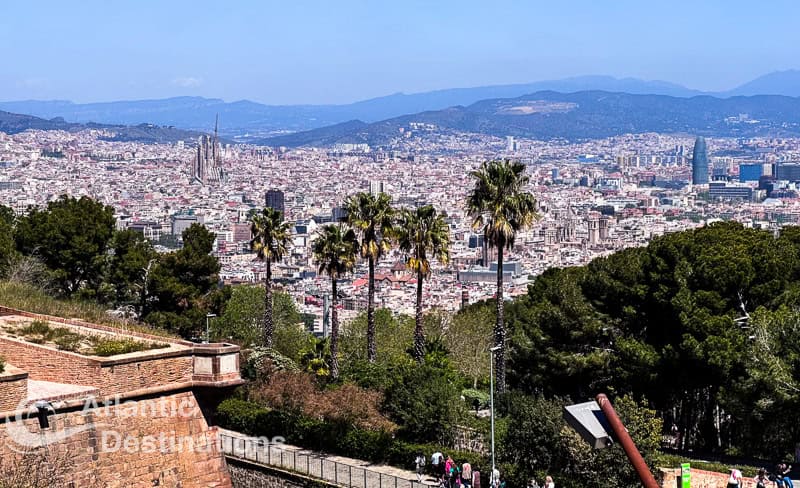
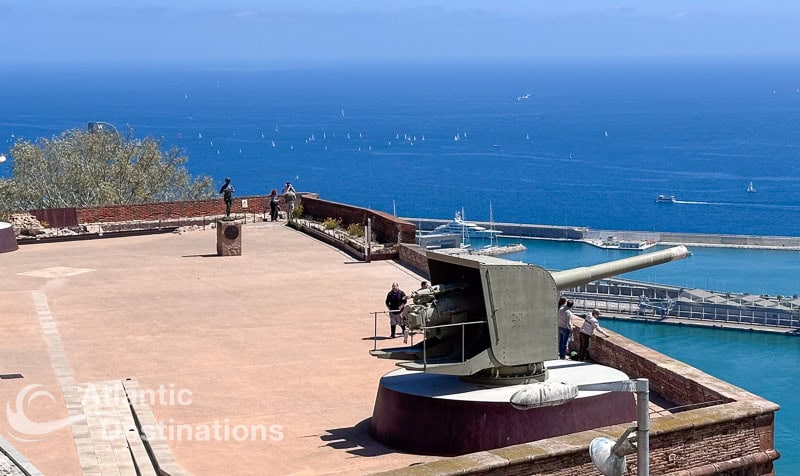
Climbing up one more level from the courtyard, I could see the Mediterranean from the highest point of the fort – aquamarine blue and just breathtaking — as well as a sweeping view of the city! I could clearly see the Sagrada Familia, where I had been the day before, and the 38-story tall Torre Glories towering over everything else.
There are turrets where soldiers would have fired their weapons from inside the protective structure and I could stand right in them and see what they would have seen.
The small building at the top of the fort with weathered-looking wooden doors is called the watchtower on which flags and fires were used to communicate with ships entering the port of Barcelona from the Mediterranean Sea.
(Click these thumbnail pictures to see a larger version.)


Inside the fort there are exhibits and artifacts to tell you all about the castle’s history.
One of the most significant stories for Catalans is the one about Lluís Companys, who served as president of Catalonia from 1934 and during the Spanish Civil War, remaining loyal to the Republican faction. Exiled in France after the war, he was captured by the secret police of Nazi Germany, the Gestapo, and handed over to the Spanish State of Francisco Franco, which executed him at this castle in 1940.
It’s one of those places where history meets beauty, and it was well worth the visit.
This is the cable car tour I took. Click this link to check prices and availability:
▶︎ BOOK Barcelona: Montjuïc Cable Car Roundtrip Ticket
Souvenir shopping: trinkets or genuine cultural items?
Around the Sagrada Familia, there were numerous souvenir shops with the usual fare of coins, phone covers, hats, shirts, and fridge magnets all emblazoned with the name Barcelona or representations of the basilica or other attractions. There were also lots of statuettes of various animals finished in a colorful mosaic pattern – they actually reminded me of the kinds of trinkets you can get in Mexico.
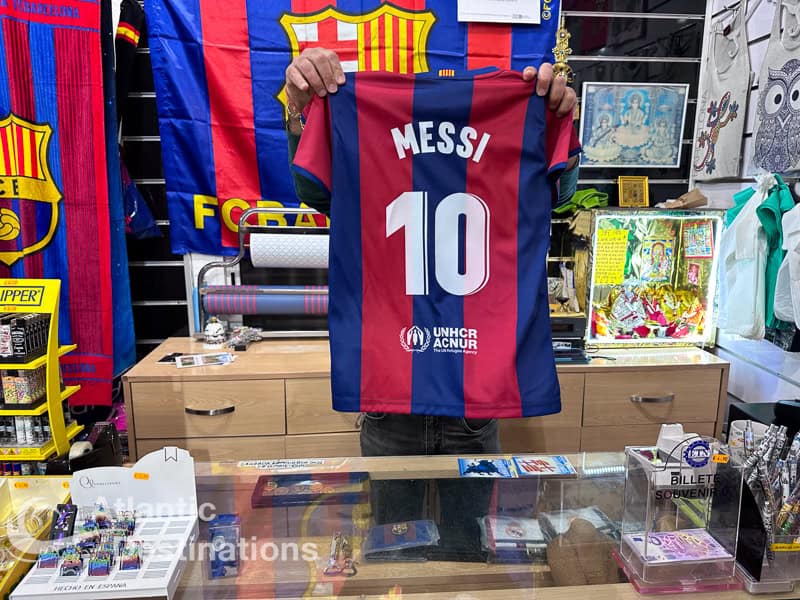
As I mentioned above, I found some Lionel Messi football/soccer jerseys for my grandkids, which went over really well with my young Messi fans!
In town and further away from the tourist areas there are more interesting locally-made souvenirs that are more culturally significant. For example, consider some local artwork or postcards.

Or perhaps a Porró, a traditional Catalan glass wine pitcher used by everyone at the table to drink from without touching it with their lips. Just hold the spout close to your mouth and tilt it forward to make the wine come out, then pull the porró as far away from your face as possible and watch what happens. Everyone gets to try and having some paper towels handy might be a good idea!
I generally tend to stay away from taking food and drink home with me as it may increase my chances of more me-time than I wanted with the customs folks…
I found a Levi’s store, which I don’t see anymore here in America, but the temptation to buy a new pair of jeans quickly disappeared after seeing the price tag. Over $100 for a single pair? No thanks—I’ll grab those back in the States.
So just keep in mind that some things can be more expensive for the traveller than they are at home.
Getting around: the metro, scooters, and everything in between
As I mentioned above, Barcelona’s public transit system is incredibly good, and I relied heavily on the metro (subway) to get around during my 3 days in Barcelona. It’s extensive, clean, and reliable—just the kind of setup a jet-lagged traveler can appreciate.
The system was easy to navigate thanks to clear maps and helpful station signs. The escalators and elevators/lifts were a blessing in the multi-level stations where several subway lines came together (because who wants to deal with endless stairs?).
Here’s a few helpful tips about the metro:
- One ticket can get you a ride on the metro, the bus, the regional train, the national train and the funicular that takes you to Montjuic and to Tibidabo.
- Depending on how long you’re visiting, you might consider a multi-day pass instead of a single-day or single-ride ticket. The multi-day passes can end up being more economical and convenient. Trust me on this one—just get the pass if you plan to use the subway a lot.
- Metro signs are written in Catalan, English, and Spanish
- Download this app (Android/ iPhone) to get up-to-the-minute wait times for all the city’s bus stops and metro stations.
The subway quickly became my go-to, but there are also buses and cars, and walking is safe and surprisingly relaxing as you can take your time to absorb the sights.
Renting a car is not necessary unless you want to drive somewhere out of the city, but guided tours with coach transport to most of these sites are plentiful.
If you really want to drive, there are car rentals (or hired cars) waiting at the airport when you arrive with many of the vendors open from 7 am till midnight. If you would like to book ahead for a car, here’s our recommended booking site.
If you drive, just watch out for the masses of motorcycles, scooters, and Vespas that rule the roads. The sheer volume of two-wheeled vehicles was surprising—but also kind of charming as they’re remarkably quiet compared to some of the ear-shattering noise machines we’re used to in America.
There are ride-hailing services available, but due to local Barcelona regulations you need to wait at least 15 minutes to complete your booking.
- Cabify: a transportation app that offers car and taxi rides, motorcycle deliveries, and airport cabs in many cities worldwide. Download the app: iPhone | Android
- Uber: a transportation company that connects passengers with drivers through a smartphone app: iPhone | Android
You can hail regular local taxis without incurring the 15-minute booking delay — they are easily identifiable with a yellow and black color scheme.
In town, walking is pleasant and safe. The only caveat is to be on the lookout for pickpockets — as recently as 2019, 41 percent of the crime in Barcelona was pickpocketing. For more, see “Is Barcelona safe?” in the FAQs below.
The wide sidewalks I saw are divided into lanes: pedestrians walk closest to the buildings, a row of trees defines the next lane for bicycles and motorcycles, and another row of trees defines the area for two-wheeled vehicle parking and bus stops. It’s all very structured and very European.
People, pastries, and language
By Saturday night, I was getting a bit tired from walking, sightseeing, and trying to squeeze as much as I could into my short stay. On the way back to my AirBnB I stopped at a local restaurant to get some dinner.
The young man behind the counter spoke basically no English, and my 25 words of Spanish didn’t help either. However, the folks behind the counter were very nice and through a series of grunts, pointing, multi-lingual hand gestures, and a judicious use of my smattering of individual spanish words, we eventually figured out what we needed.
I found all the people I met during my 3 days in Barcelona to be similarly friendly and helpful. A number of the locals spoke some English and I was able to get by with my very minimal Spanish without much bother (although I’d really like to be more proficient with the language).
Even without a common language, I think he knew right away that I was drooling over the amazing pastries in the display case – my eyes must have gone as wide as saucers when I saw them. They were delicious.
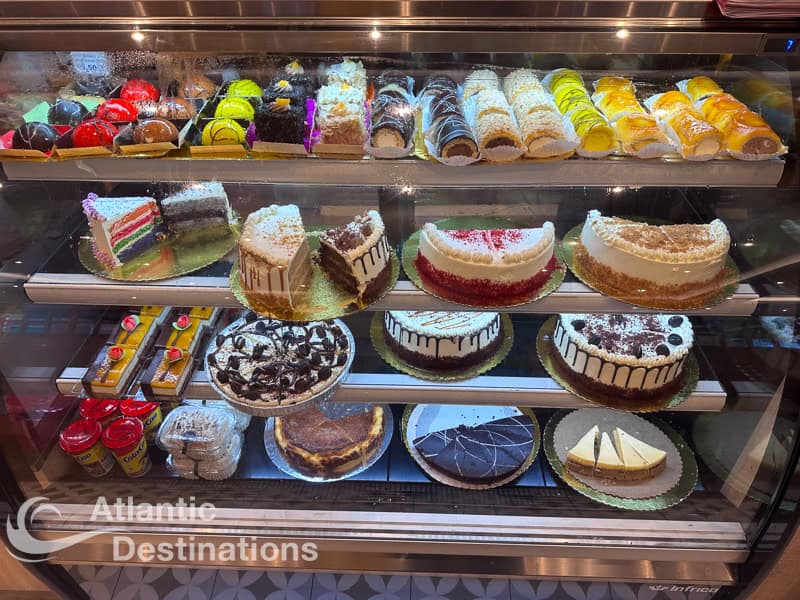
Along with my pizza dinner, I took a few of the pastries back to the AirBnB, made a cup of tea, and sat under the sun on the AirBnB’s balcony for a relaxing evening. My 3 days in Barcelona had come to an end, but the memories I made were more than enough to keep me dreaming about a return visit.
But wait, there’s more…
If you want to include or substitute other things into your 3 days in Barcelona, or even if you want to stay a little longer and expand your list of things to do, here’s a few more suggestions.
Note — all these tours have been rated as 4.9-5.0 out of 5 on the customer satisfaction scale, so no matter which you choose you can’t go wrong!
(Click any of these links to check prices and availability):
Tours – walking, biking, and more
- Best of Barcelona: Sagrada Familia, Park Guell, Montjuic & Gothic
- Guided Walking Tour
- E-Bike tour in Barcelona with English Guide
- Penedès: Self-Guided Bike Tour with Winery Visit
- Barcelona City Tour Panorámico (helicopter tour!)
- Jewish Tour by a Jewish guide
History
Architecture
- Ramblas, Old Town, Gothic and Gaudi Architecture Walking Tour
- Sagrada Familia and Park Guell Small-Group Tour
- Gothic Quarter & El Born Small Group Tour
- Gaudi’s Casa Vicens Good morning Visit
Food
- Tapas and Wine Experience Small-Group Walking Tour
- Bean to Bar chocolate workshop in Barcelona
- Paella Seafood Master Cooking Class with Sangria
- Barcelona at Sunset: Tapas & Wine Tour
- No Diet Club – Unique local food in Barcelona
- Walking Food Tour With Secret Food Tours
- Tastes and Traditions: Food Tour with Market Visit
Near or IN the water
- Guided Snorkel at Barcelona Beach
- Small Group Sailing with Snacks and Cava
- Sunrise Sailing. The Best Start to Your Day
- Sunset Sailing Tour with open bar and snacks
- Lunch or Dinner Catamaran Sailing Tour
Museums
The arts
- Rooftop Tango Lesson & Drinks in Barcelona
- Insider street art tour with exclusive visit to artist studios
- Create Your Own Ceramic Tiles Workshop
Photography
Things to do NEAR Barcelona
- Pyrenees: Day Hike with a Choice of 3 Levels
- Tossa de Mar Kayak & Snorkel Tour w/3-Course Meal
- Tossa de Mar Scuba Diving and 3-Course Meal
- Medieval Towns and Nature Parks Exclusive Trip with Pickup
- Costa Brava: Kayak, Snorkel, Photos, Lunch & Beach from Barcelona
- Montserrat Hot Air Balloon Ride with Champagne Toast
- Montserrat Half-Day Tour with Tapas and Gourmet Wines
- Montserrat Monastery Half Day Experience from Barcelona
Frequently asked questions (FAQs)
Is Barcelona safe?
I felt very secure during my 3 days in Barcelona – people are friendly and helpful and the only thing that was a bit disconcerting was one fellow who took advantage of us as a captive audience in a subway car to deliver what I took to be a political speech (it was all in Catalan or Spanish!). But otherwise it was an enjoyable stay and, in truth, even watching people’s reactions to that speech was an interesting thing to behold!
Just one warning: almost everyone in Barcelona has a first or second-hand pickpocketing story. The statistics say that pickpocketing accounted for 48.1% of crimes committed in Barcelona in 2019.
I heard one fellow describe how two men stopped in front of him in the subway doors pretending to look up at the map and, while he was immobile, their friend behind him pickpocketed his wallet.
So just keep that in mind and don’t let your guard down. I didn’t have any encounters with pickpockets when I was there, but I have a slim wallet that I keep in my front pocket – there’s nothing in my back pockets to be grabbed. Put your phone away when you’re not using it, and never leave it sitting out on the table if you’re dining outside.
Can you rent bicycles in Barcelona?
There are more than 124 miles (200 kilometers) of bike paths in Barcelona for some healthy sightseeing. Cycling lanes are clearly marked and the terrain is largely flat which makes for easier peddling.
You may see rows of red shared bikes called Bicing, but those are for locals (you’d need proof of residency) and not for travelers.
If you want to take advantage of Barcelona’s bike lanes, here are some of the best places to rent:
– Mattia 46
– Barcelona Rent a Bike (also has bike tours)
– Ocean Bikes Barcelona (also has bike tours)
– Green Bikes (also has bike tours)
– Bike Rental Barcelona (will deliver the bike to you)
Be strategic about where you stop it and lock it – in Barcelona, bike thieves can be as common as pickpockets.
How many days in Barcelona is ideal?
While you can spend weeks, months, and even years getting to know Barcelona, you can definitely see the main highlights of this city in just a few days.
Like me, you might not want to leave by the end of it, but my 3 days in Barcelona were enough for a first-time trip and whetted my appetite for more in the future.
What is Barcelona best known for?
Barcelona is the Catalan capital and is one of the most famous cities in the world, known for its historical architecture, great food, and culture. Barcelona draws visitors to its famous sights such as the Sagrada Familia, Parc Güell, Casa Batlló, and La Pedrera.
Is Barcelona walkable?
Barcelona is a very walkable city. We strolled through the different neighborhoods, walking between destinations, and enjoyed close up views of the city’s attractions.
Do you tip in Barcelona?
While tipping isn’t expected in Barcelona, folks will demonstrate their appreciation for good service by leaving a small amount of change or rounding up the bill to the nearest euro. And if the service is exceptional, a tip amounting to 5-10% of the total bill is commonly offered.
Do I need cash for Barcelona?
You can pay by card virtually anywhere in Spain – including large cities and remote villages on the coast. Some places (such as tobacco shops or bus recharge spots) do not accept card payments for very small transactions (under €10) so it’s wise to carry some cash.
Can you use US dollars in Barcelona?
Always pay In Euros.
Warning: The credit card machines will often ask, “Do you want to pay in dollars?” with a YES/NO option. It’s best to answer “NO”.
Why? According to American Express, if you choose to pay for items in your home currency, you may be subject to a DCC (Dynamic Currency Conversion) fee imposed by the merchant’s credit card processor. They add that you may pay more to use DCCs, and in some cases you might pay as much as double the basic currency exchange fee for a foreign transaction.
When you enter “NO”, it may seem like you’re turning down the entire purchase, but don’t worry, the machine will proceed on its own to finish the transaction in Euros.
Is there Uber in Barcelona?
Yes. The Uber app gives you the power to request a ride to get around Barcelona anytime, 24/7.
When is the best time to visit Barcelona?
With comfortable temperatures and less crowds, March, April, May, and October are perfect for exploring the city. If you want to make the most of Barcelona’s beaches, then summer offers up seven or more hours of daily sunshine.
One point: during the summer of 2024, some of the locals took action to demonstrate their displeasure at having so many tourists in their home city by spraying tourists with water from water pistols. This has disappeared along with the summer tourist season, but traveling in the above months may help you circumvent these kinds of actions.
Is Catalan a language or a dialect?
There are cultural and historical differences between Catalonia and Spain and this is a classic example. Catalan is a language that dates back thousands of years and has French and Italian influences.
It’s spoken throughout Catalonia and in some parts of southern France.
Conclusion: Barcelona has more to explore
While my 3 days in Barcelona were packed with highlights, I barely scratched the surface of all there is to do here. From museums to festivals, nightlife to historic tours, this city has something for everyone.
The food alone could be reason enough to visit: fresh seafood, local pastries, an endless supply of tapas (small plates or appetizers), and more.
Here’s some final travel tips if you’re planning a stay:
- Get yourself a multi-day metro pass. It’s convenient and saves you the hassle of buying single tickets.
- Stay aware of your belongings in crowded areas like La Rambla—pickpockets are known to target tourists.
- If you’re renting a bicycle, make sure to lock it securely. Bike thieves are as common as pickpockets.
So, what’s the takeaway?
For me, Barcelona may have started as a business trip but it quickly turned into a memorable adventure. This city has a way of drawing you in, and I’m already thinking about when I can return and bring Jackie (my lovely wife) with me to see everything I missed.
Happy travels!
Have you been to Barcelona? What tours and trips did you enjoy the most? Contact us and let us know.